


What Happens to Your Skin After a Skinbooster Treatment? A Week-by-Week Guide for First-Time Patients
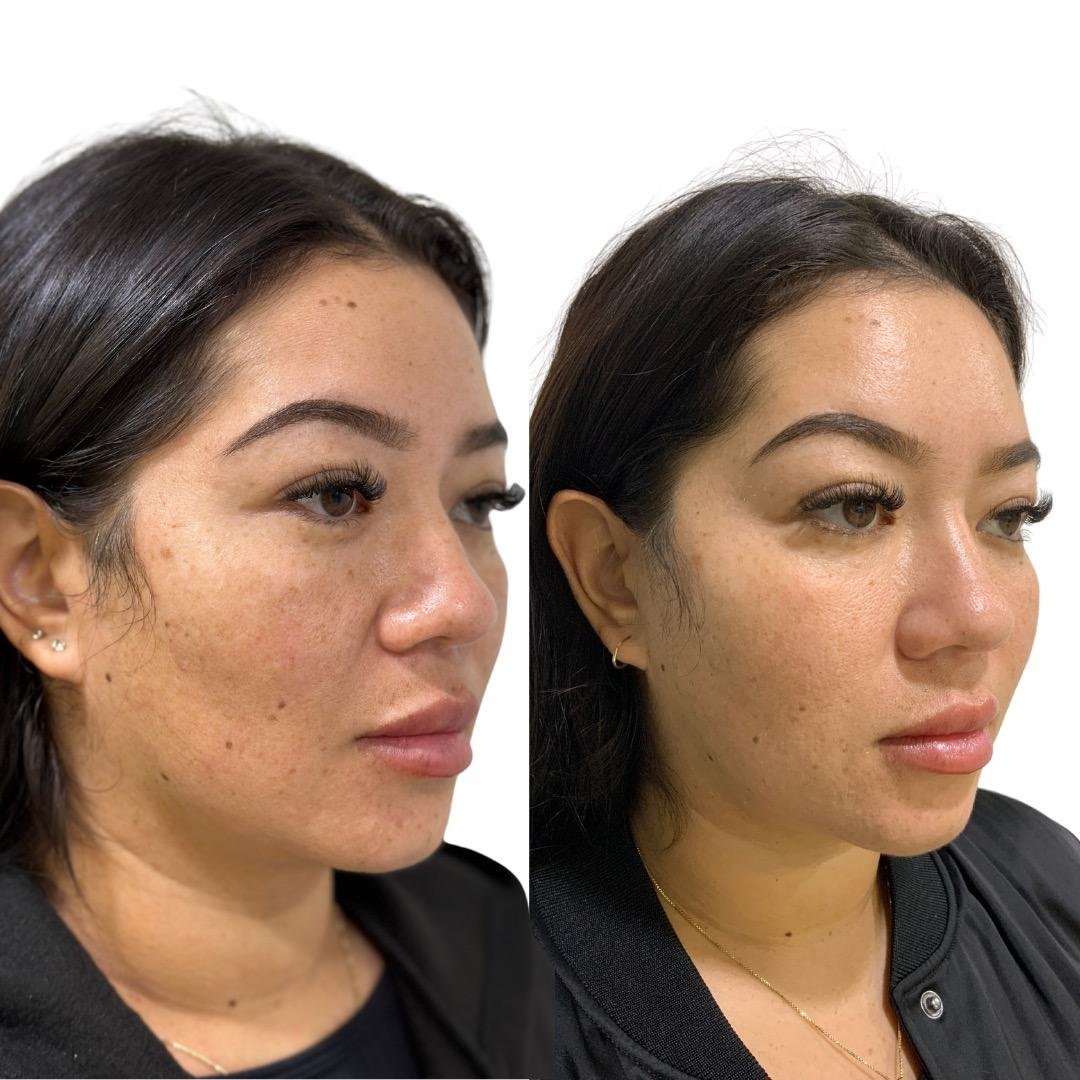
When Melissa, a 40-year-old patient in Amsterdam, tried a skinbooster treatment, she was not completely sure what to expect. In a published review, she later described her skin as feeling firmer, smoother, and healthier, with the natural-looking improvement being the part she valued most. Another Amsterdam patient said that after one treatment, her skin felt more hydrated and her fine lines looked less noticeable.
Those experiences are personal, so they cannot predict what every patient will see. What they do show is that skinbooster results are usually more about gradual changes in skin quality than an obvious transformation overnight.
You may spend hours of research comparing treatments, checking before-and-after photos, and reading about hyaluronic acid, yet still have no clear idea what your own skin may look like the next morning, a week later, or a month after treatment.
That is because two things happen at the same time. First, your skin has to recover from the injections. Then the changes in hydration, smoothness, texture, firmness, and elasticity become easier to judge.
Why Skinbooster Results Take Time
Skinboosters are mainly used to improve skin quality rather than reshape the face. Many products contain hyaluronic acid, a substance known for its ability to bind water and support hydration within the skin.
This is different from the way traditional dermal fillers are commonly used. Fillers may be placed deeper to restore volume or change facial contours, while skinboosters are generally intended to improve the condition and appearance of the skin itself.
Because of that difference, the results are often more subtle and take longer to assess.
A 2023 systematic review screened 2,996 scientific papers and included 13 clinical studies on injectable hyaluronic acid for facial skin quality. Across those studies, researchers reported improvements in hydration, firmness, brightness, texture, radiance, and elasticity.
The same review also pointed out that larger randomised controlled trials are still needed. That matters because the evidence is encouraging, but it does not support promises of dramatic or identical results for everyone.
Treatment Day: Your Skin May Look More Treated Than Improved
Straight after treatment, the mirror may show something very different from the smooth skin you had imagined.
Small injection marks can be visible, and the skin may look red, slightly swollen, or uneven. Some areas may feel tender or warm, while tiny raised points can appear where the product has been placed. Bruising is also possible.
These early changes are usually related to the injection process rather than the final result.
A 2025 clinical study involving 40 patients treated with Belotero Revive found mild temporary redness in 15% of patients and bruising in 7.5%. In that study, these reactions resolved within 24 to 72 hours without additional treatment.
Those figures are useful for context, but they should not be treated as a fixed prediction. Your own reaction can depend on the treatment area, the product used, the injection method, your skin condition, and how easily you tend to bruise or swell.
You may also notice that one side looks slightly puffier than the other. Mild uneven swelling can happen after injections, but it should gradually improve. If one side becomes increasingly painful, unusually pale, very swollen, or changes colour in a concerning way, it should be checked promptly.
For practical reasons, it is sensible not to schedule a first treatment immediately before a wedding, work presentation, photoshoot, or other event where bruising or swelling would bother you.
The First 24 to 48 Hours: Recovery Comes Before Results
During the first two days, the focus should be on letting the skin settle rather than trying to decide whether the treatment has worked.
Redness may begin to fade, swelling may become less noticeable, and the injection points may start to blend into the surrounding skin. Even so, the treated area can still feel slightly tight, tender, or sensitive when you cleanse your face.
A simple routine usually makes the most sense at this stage. Avoid repeatedly pressing, rubbing, or checking the treatment areas because freshly injected skin does not need extra irritation.
Strong exfoliating acids, harsh scrubs, and products that normally sting or cause peeling are also better avoided while the skin is settling.
Sun protection matters as well. Freshly treated skin can be more sensitive, so protecting it from strong sun exposure is a sensible part of recovery.
The exact advice for exercise, makeup, sauna use, skincare products, and other activities can vary depending on the product and injection technique, so the instructions given by the treating professional should always come first.
Days 3 to 7: Redness and Swelling Should Be Improving
By the middle or end of the first week, uncomplicated redness and swelling should generally be reducing.
Bruising may take a little longer to disappear because it naturally changes colour before fading. Small bumps can also remain noticeable for several days, especially when the product has been placed more superficially.
These tiny raised areas can sometimes feel more obvious than they look. Local swelling around each injection point can temporarily make the surface feel uneven, and the bumps usually become flatter as the swelling settles and the material integrates into the treated tissue.
The direction of recovery matters more than whether your skin looks completely normal on a particular day.
A small bump that becomes softer and less noticeable is very different from an area that becomes increasingly painful, hot, red, pale, or swollen. If symptoms are clearly worsening instead of settling, contact the treating professional rather than waiting for the next appointment.
Week 1: Early Improvement Can Be Easy to Miss
By the end of the first week, some people begin to notice that their skin feels softer or slightly less dry. Others may look in the mirror and see almost no obvious difference yet.
That does not automatically mean the treatment has failed.
Skinboosters are not designed to create the same instant visual change as a volumising filler. A first session may begin changing skin quality before those changes become obvious.
One small clinical study followed 20 adults who received three sessions of non-cross-linked hyaluronic acid at three-week intervals. Researchers assessed the skin one week after the final treatment and again four months later.
Skin firmness improved significantly at both follow-up points, while some measures of elasticity improved as well. Hydration also increased, although that change was not statistically significant in that particular study.
This is useful because it shows that different aspects of skin quality do not necessarily improve at the same speed. One person may notice softness first, while another notices changes in texture or hydration later.
Week 2: Hydration May Become Easier to Notice
By the second week, most uncomplicated injection-site reactions should have settled enough for you to focus on how the skin behaves during normal daily life.
You may notice that moisturiser spreads more comfortably, dry areas feel less rough, or foundation sits more evenly. These are subtle changes, but they are more relevant to the purpose of skinboosters than a dramatic change in facial shape.
A 2025 study involving 40 patients measured hydration with a corneometer instead of relying only on patient opinions. After one treatment, average hydration increased by 14.9%. After two treatments given four weeks apart, the average increase reached 16.6%.
These figures show that hydration changes can be measured, but they are still study averages rather than a promise for every patient.
Your age, starting skin condition, product choice, treatment area, skincare routine, smoking, sun exposure, and injection technique can all influence how much change you notice.
Week 3: Texture Becomes Easier to Judge
By Week 3, treatment-related swelling should no longer be making a major difference to the way your skin looks, which makes this a better time to assess texture.
Try looking at your face in normal daylight instead of standing very close to the mirror under harsh bathroom lighting. Pay attention to how the skin behaves in everyday situations.
Does it feel smoother when you cleanse it? Does makeup sit better? Do rough or dry areas look less obvious? Do fine surface lines appear softer when your face is relaxed?
Fine lines also need to be judged realistically.
A shallow line made more visible by dryness may soften when the skin is better hydrated. A deeper crease caused by repeated facial movement, collagen loss, or structural ageing is different.
Skinboosters may improve the quality of the skin around those deeper lines, but they are not designed to erase every established wrinkle.
That distinction matters because a subtle improvement can still be a good result when the goal is healthier-looking skin rather than a major facial change.
Week 4: A Better Time to Assess the First Session
By Week 4, enough time has passed to compare your skin more fairly with how it looked before treatment.
This point is also important because many skinbooster protocols use several sessions rather than relying on one appointment.
A randomised multicentre clinical study involving 159 participants compared single and multiple treatments with a hyaluronic acid and glycerol injectable. People with dry or very dry skin showed measurable improvements in hydration during follow-up, while satisfaction was generally higher among those who received multiple treatments.
This helps explain why repeated sessions may be recommended. The idea is not simply to keep adding products. Hydration, texture, and other skin-quality changes can build gradually over time.
Week 4 is also a good point to take comparison photos, but the conditions need to stay similar. Try to use the same camera angle, lighting, distance, and facial expression. A photo taken beside a bright window can make the skin look very different from one taken under warm indoor lighting, even when very little has changed.
Weeks 5 to 8: Another Session Can Restart the Short Recovery Period
If your treatment plan includes another appointment around Week 4, some of the early recovery process may happen again.
Fresh redness, tenderness, mild swelling, bruising, or small injection marks can appear after the next session. This can feel frustrating when your skin had only just started to look fully settled, but it does not mean you have gone backwards.
Recovery from the new injections and improvement from the wider treatment course can happen at the same time.
Published clinical protocols have used repeated sessions spaced several weeks apart, including schedules with three treatments at four-week intervals. This type of spacing allows the skin to settle between sessions while the overall treatment response is assessed over time.
For this reason, comparing your skin the morning after Session 2 with a photograph taken several weeks after Session 1 is not very useful. Each session needs its own recovery period before the result can be judged fairly.
Weeks 9 to 12: The Overall Treatment Result Becomes Clearer
If three sessions are used at roughly four-week intervals, the third treatment may happen around Week 8. By Weeks 9 to 12, you are beginning to assess the treatment course as a whole rather than one appointment in isolation.
At this point, the changes may be easier to describe as better hydration, smoother texture, improved elasticity, or healthier-looking skin. Fine dryness lines may look softer, while your basic facial features should remain familiar.
In the 159-participant randomised multicentre study, investigators rated 90.7% of patients in the multiple-treatment group as at least improved by Week 12.
That figure needs context. It does not mean almost everyone experienced a dramatic transformation.
Clinical improvement can be subtle, and subtle improvement is often exactly what a skin-quality treatment is intended to produce.
What If You Still See Very Little Difference?
Some first-time patients reach Week 2 or Week 3 and begin wondering whether anything has happened at all.
That does not automatically mean the treatment has failed, especially after one session. Improvements in hydration, texture, and elasticity can develop gradually, which is one reason some treatment plans use several appointments.
At the same time, results should not be exaggerated. Some people will simply respond more noticeably than others.
If you complete the recommended treatment course and still cannot see or feel a meaningful improvement, discuss the result with your clinician before automatically booking more injections.
More treatment is not always the right answer if the original concern would respond better to another approach.
How Long Can the Improvement Last?
There is no single duration that applies to every patient.
In the 159-person Belotero Revive study, improvements in hydration among people with dry or very dry skin remained measurable for months after treatment, showing that the effect can continue well beyond the initial recovery period.
How long you personally notice a difference can depend on your age, skin condition, sun exposure, smoking, general health, skincare routine, the product used, and the number of sessions.
This is why maintenance should be based on your own skin rather than a schedule copied from another patient.
When Does a Reaction Need Medical Attention?
Mild redness, tenderness, swelling, bruising, and temporary small bumps can occur after injections. In an uncomplicated recovery, these symptoms should gradually improve.
Severe or increasing pain, rapidly worsening swelling, spreading redness, unusual whitening of the skin, grey or mottled colour changes, heat, pus, or other symptoms that are becoming more concerning should be assessed by the treating professional.
Any sudden visual disturbance after facial injections requires urgent medical attention.
This safety point is particularly relevant in the Netherlands. The Dutch Inspectie Gezondheidszorg en Jeugd (IGJ) received 175 reports about botox and filler treatments in 2025. In 117 of those 175 reports, or 67%, the treatment had reportedly been performed by someone without the required authority.
The IGJ also stresses that cosmetic injectable procedures require medical knowledge, including an understanding of facial anatomy, the products being used, and how to recognise complications.
Patients can check a doctor's professional registration through the Dutch BIG-register before undergoing a cosmetic injectable treatment.
Choosing a properly qualified provider matters because a safe treatment is not only about how good the result looks. It also depends on whether complications can be recognised and managed quickly if something unusual happens.
When Should You Really Judge the Result?
The first few days mainly tell you how your skin reacts to the injections. They do not tell you much about the final improvement in skin quality.
By the second and third week, changes in hydration, softness, and texture may become easier to notice. Around Week 4, you can make a fairer assessment of the first session, while a multi-session treatment course may take two or three months before the overall result becomes clear.
The 2023 systematic review found encouraging evidence for improvements in hydration, firmness, brightness, texture, radiance, and elasticity, while also making it clear that larger controlled studies are still needed.
That balance is important for first-time patients. Skinboosters can improve skin quality, but they are not magic and they do not create exactly the same result in everyone.
The most realistic outcome is usually not a completely different face. It is your own skin looking and feeling smoother, better hydrated, and healthier once the early injection reactions have settled and the treatment has had enough time to work.

 English
 Arabic
 French
 Spanish
 Portuguese
 Deutsch
 Turkish
 Dutch
Dutch
 Russian
 Romaian
 Portuguese (Brazil)
 Greek
Greek