


FSG Network: MPO Trunk Solutions for Organized High-Density Fiber Networks
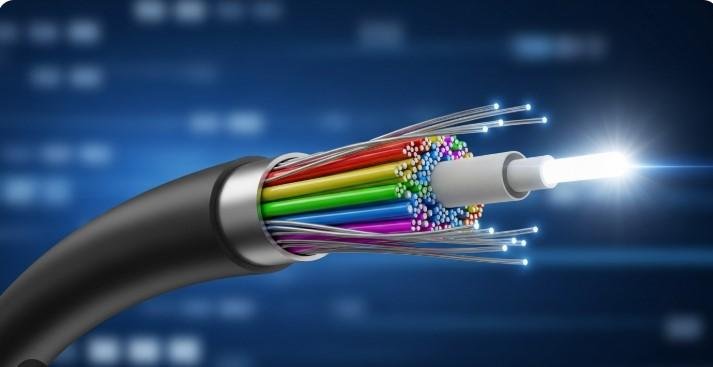
Modern data infrastructure depends on reliable and well-organized fiber connectivity. As businesses, cloud providers, telecommunications companies, and data centers handle increasing volumes of information, network architecture must support high bandwidth while making efficient use of physical space. Managing a large number of individual fiber connections can become complicated, particularly in facilities where equipment racks are densely populated. FSG Network provides fiber optic connectivity products designed to help network operators create structured and scalable optical infrastructure.
Understanding Multi-Fiber Trunk Cabling
An MPO trunk is a pre-terminated multi-fiber cable assembly designed to carry multiple optical fibers through a single organized cable structure. Instead of installing numerous individual fiber cables between network locations, a trunk assembly groups multiple fibers together to simplify backbone connectivity.
This approach can be useful in data centers and other high-density environments where hundreds or thousands of optical connections may be required. A properly designed trunk assembly can reduce cable clutter, simplify installation, and make the overall infrastructure easier to manage.
MPO-based trunk systems typically use multi-fiber connectors at their ends, allowing several optical channels to be connected simultaneously. The exact configuration depends on the fiber count, connector type, polarity, and equipment involved in the installation.
Why Trunk Cables Matter in Data Centers
Data centers contain servers, switches, storage systems, patch panels, and other equipment that must communicate continuously. As the number of devices increases, the physical cabling infrastructure can become difficult to organize.
An MPO trunk provides a practical method for handling multiple fiber connections between different areas of a facility. Rather than routing every fiber independently, network designers can use pre-terminated multi-fiber assemblies for backbone connections.
This can help reduce installation complexity and make cable pathways more structured. In a large data center, organized trunk cabling can also make it easier for technicians to identify and maintain connections.
Advantages of Pre-Terminated Fiber Assemblies
Pre-terminated fiber assemblies are manufactured and tested before they are delivered for installation. This means installers do not necessarily need to terminate individual fibers on-site, which can reduce the amount of field work involved in deployment.
An MPO trunk can be manufactured with connectors already attached and configured according to the customer's requirements. This can help improve installation efficiency, particularly when a project includes a large number of connections.
Pre-termination also allows manufacturers to perform quality checks before the assembly reaches the installation site. Proper testing can help verify optical performance and connector configuration before the system is placed into service.
Choosing the Correct Fiber Count
Fiber count is one of the first specifications that should be considered when planning a trunk cable system. Different applications require different numbers of optical channels, and the selected assembly needs to match the network architecture.
Common multi-fiber configurations may include 8, 12, 16, 24, or higher fiber counts depending on the application. The appropriate choice depends on equipment interfaces, required bandwidth, available space, and the desired cabling structure.
FSG Network provides MPO cable solutions in multiple configurations, allowing network planners to select assemblies according to their infrastructure requirements. Reviewing the required fiber count before ordering can prevent unnecessary conversions and make installation more straightforward.
MPO Trunk Systems and High-Density Connectivity
High-density environments require careful planning because physical space inside racks and cable pathways is limited. Multi-fiber trunk systems can help address this issue by grouping several optical connections within a compact cable assembly.
An MPO trunk can carry multiple fibers between distribution points while reducing the number of separate cables that need to be routed. This can contribute to a cleaner installation and make better use of available pathway space.
For facilities undergoing expansion, high-density trunk cabling can also provide a structured foundation for adding additional connections as network requirements increase.
Understanding Polarity
Polarity is a critical consideration when designing any multi-fiber optical system. It determines how transmit and receive fibers are aligned between two connected devices.
MPO systems may use different polarity methods, and the selected method must be consistent throughout the optical link. If the polarity arrangement is incorrect, the connected equipment may not communicate properly even when the physical connectors fit together.
Before installation, network planners should document the required polarity configuration and ensure that trunk cables, patch cables, modules, and equipment interfaces follow the same arrangement.
Proper polarity planning can save considerable time during installation and troubleshooting.
Fiber Type and Transmission Requirements
Another important consideration is the type of optical fiber used in the trunk assembly. Single-mode and multimode fiber serve different network applications and transmission requirements.
Single-mode fiber is commonly associated with longer-distance optical links, while multimode fiber can be suitable for shorter-distance connections in certain data center environments. Multimode systems may also use different grades, such as OM3 or OM4, depending on the required application.
When selecting an MPO trunk, the fiber type should match the transceivers, switches, and other optical equipment connected to the cable. Using incompatible components can create performance and installation problems.
Applications in Cloud and Telecommunications Infrastructure
Cloud computing facilities require extensive network connectivity because large volumes of information move continuously between computing resources and storage systems. Telecommunications facilities also rely on structured fiber networks to support communication services.
MPO-based trunk assemblies can be useful in these environments because they provide a compact method for handling multiple optical channels.
FSG Network supplies fiber optic connectivity products intended for data centers, telecommunications, enterprise networks, and other high-density applications. Its product portfolio includes MPO connectors, trunk cables, breakout cables, adapters, and related components that can be combined into structured optical systems.
Supporting AI and High-Performance Computing
Artificial intelligence and high-performance computing environments can place significant demands on data center networks. Computing systems may need to exchange large amounts of information between processing nodes, storage platforms, and network switches.
As equipment becomes more densely deployed, efficient cabling becomes increasingly important. An MPO trunk can help organize multiple optical connections while reducing the physical complexity associated with individual fiber runs.
Network designers should still consider the complete architecture, including transceiver interfaces, fiber type, polarity, connector configuration, and required transmission performance.
Importance of Cable Management
Even high-density fiber assemblies require appropriate cable management. Optical cables should be routed carefully to avoid excessive bending or mechanical stress.
Cable pathways should provide enough room for installation and future maintenance. Labels should clearly identify both ends of each connection so technicians can trace links without unnecessary difficulty.
A well-organized MPO trunk installation can make future troubleshooting more efficient. When every assembly is documented and routed logically, technicians can identify individual connections more quickly.
Optical Performance and Testing
Optical performance depends on the quality of the complete connection. Insertion loss, return loss, connector alignment, fiber quality, and end-face condition can all influence the performance of an optical link.
Pre-terminated assemblies should be tested according to appropriate specifications before deployment. Testing can help identify problems with connectors, polarity, or optical characteristics before the cable is installed into a live network.
FSG Network provides fiber optic cable assemblies and connectivity products for applications requiring controlled optical performance. Reviewing technical specifications and test information before purchasing is an important step for network planners.
Planning for Future Expansion
Network infrastructure should not only address today's requirements. Organizations may add new servers, upgrade switching equipment, expand storage capacity, or deploy additional cloud and AI workloads.
A scalable trunk architecture can make these future changes easier to manage. Network planners can consider spare fiber capacity, additional pathways, and modular connectivity during the initial design stage.
Selecting the appropriate MPO trunk configuration can therefore become part of a broader strategy for building adaptable network infrastructure.
Selecting a Suitable Fiber Connectivity Partner
When purchasing multi-fiber assemblies, organizations should review product specifications, manufacturing consistency, testing procedures, customization options, and technical support.
FSG Network provides a range of fiber connectivity products covering MT ferrules, MPO connectors, adapters, trunk cables, and breakout assemblies. This broad product range can help customers source multiple components for a coordinated optical infrastructure.
For specialized installations, customization may also be important. Different facilities can have different fiber counts, connector configurations, cable lengths, and polarity requirements, so a flexible product approach can be useful.
Conclusion
Efficient fiber infrastructure is essential for modern data centers, telecommunications facilities, cloud platforms, and advanced computing environments. As the number of network connections increases, organizations need ways to manage multiple optical links without creating unnecessary cabling complexity.
An MPO trunk provides a structured method for carrying multiple fibers within a single pre-terminated assembly. It can simplify backbone connectivity, support high-density installations, and contribute to cleaner cable management when properly planned.
FSG Network offers MPO and related fiber connectivity products that can be incorporated into different optical network architectures. By evaluating fiber count, fiber type, polarity, connector compatibility, optical requirements, cable routing, and future expansion needs, network designers can create infrastructure that is organized, scalable, and easier to maintain over time.

 English
 Arabic
 French
 Spanish
 Portuguese
 Turkish
 Dutch
Dutch
 Italiano
 Russian
 Romaian
 Portuguese (Brazil)
 Greek
Greek