


How Can a Mobile App Development Company Improve User Retention?
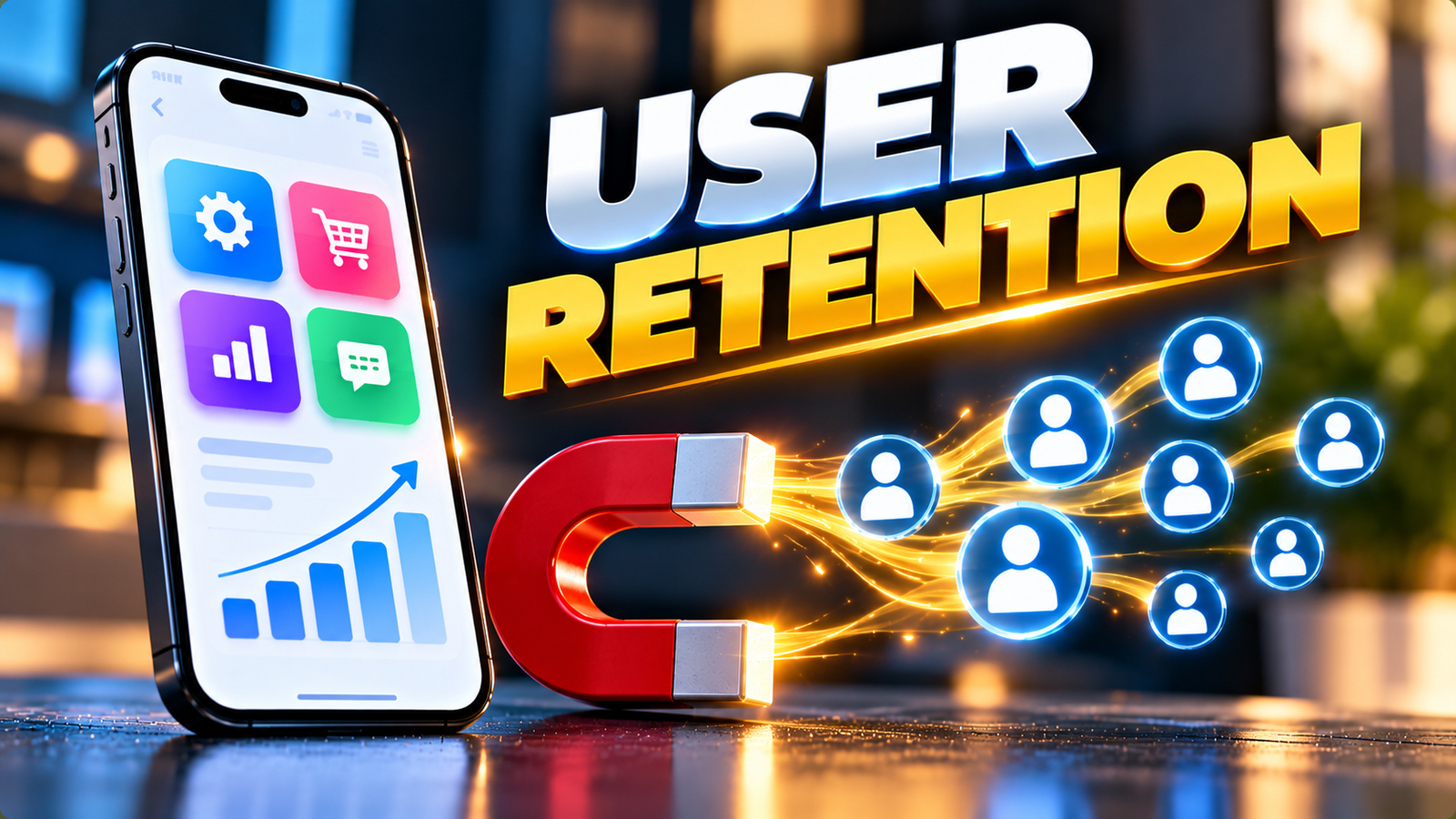
Getting users to download a mobile app is only the first step. The real challenge begins when they decide whether to open it again. If an app feels confusing, loads slowly, sends irrelevant notifications, or offers little ongoing value, users may stop engaging even if the original idea is strong.
A reliable mobile app development company helps businesses build experiences that give customers a reason to return. That means understanding user behaviour, removing friction from important tasks, and improving the product continuously rather than relying on promotions to bring people back.
Why Do Users Stop Using Mobile Apps?
Customers abandon apps for different reasons, and not every problem can be solved by adding new features. Sometimes the app fails to deliver its promised value. In other cases, users struggle to complete basic actions or receive too many interruptions.
Common causes of poor retention include:
-
Complicated registration and onboarding.
-
Slow loading, crashes, or unreliable functionality.
-
Irrelevant notifications and promotional messages.
-
Difficult navigation or confusing workflows.
-
Limited ongoing value after the first use.
-
Poor customer support when something goes wrong.
The first step is to identify which problems affect your audience. An ecommerce app may lose customers during checkout, while a booking app may struggle because availability information is unclear.
Retention improves when businesses address the reasons people leave instead of assuming users simply need more reminders.
How Can Better Onboarding Encourage Users to Return?
The first session shapes a user's understanding of the app. If registration takes too long or the benefits are unclear, potential customers may leave before experiencing its value.
A mobile app development company can simplify onboarding by reducing unnecessary steps, explaining essential features, and guiding users towards a meaningful first action.
For example, a food ordering app could help new users find a restaurant and understand the ordering process without forcing them to complete an extensive profile first. A finance app may require additional verification, but it should explain why each step is necessary.
Useful onboarding practices include:
-
Requesting only the information needed at each stage.
-
Explaining the app's main benefit clearly.
-
Providing helpful guidance without overwhelming users.
-
Showing understandable progress during longer registration processes.
-
Making error messages specific and actionable.
Onboarding should also be measured. If users repeatedly abandon the same step, the team can investigate whether the wording, required information, or technical process needs improvement.
Can Personalisation Improve Mobile App Retention?
Personalisation can make an app more relevant by adapting content, recommendations, or shortcuts to individual preferences. When implemented thoughtfully, it helps users find useful information without repeating the same searches every time.
An online retailer might display recently viewed products or recommend items related to previous purchases. A fitness application could help users continue an existing programme, while a travel app might make saved trips easier to access.
The value comes from relevance, not the amount of personal data collected. Recommendations based on inaccurate assumptions can make the experience worse, and excessive data collection can undermine trust.
Businesses should use appropriate privacy controls and allow users to manage relevant preferences. Personalisation should support the user's goals rather than pressure them into unnecessary purchases or interactions.
How Does App Performance Affect Customer Loyalty?
Users expect essential actions to work consistently. A slow product search, failed payment, or booking that disappears after submission can make customers reluctant to use the app again.
Performance optimisation should therefore be part of the development process from the beginning. Teams can monitor loading times, API response times, crash reports, and memory usage to identify where problems occur.
Consider a retail app that takes too long to display product images. Optimising image delivery, caching frequently requested data, and reducing unnecessary network calls may improve the experience, depending on the cause of the delay.
Reliability also involves handling poor connectivity and unexpected errors. If a request fails, the app should provide a clear explanation and a safe way to retry where appropriate.
A dependable experience builds confidence because customers can complete important tasks without repeatedly troubleshooting the app.
What Role Do Push Notifications Play in User Retention?
Push notifications can bring users back when they communicate something relevant and timely. Examples include appointment reminders, delivery updates, booking confirmations, and alerts about changes to a saved item.
Promotional notifications may also encourage engagement, but frequent or poorly targeted messages can become intrusive. Users may disable notifications or uninstall the app if every interaction feels like a sales pitch.
A thoughtful notification strategy should consider the user's activity, preferences, and the purpose of each message. Businesses should also distinguish useful service updates from promotional communications and provide appropriate controls.
The development team can support this strategy through notification preferences, event-based triggers, and integration with the systems that hold accurate customer or order information.
How Can Businesses Use Analytics to Understand Retention?
Retention problems are easier to address when businesses can see how customers use the app. Analytics can reveal where users leave a journey, which features receive repeated use, and whether changes improve engagement.
A mobile app development company may help define measurements such as:
-
Repeat usage: How often customers return within a defined period.
-
Onboarding completion: How many users finish the initial setup.
-
Feature adoption: Which features customers use after installation.
-
Conversion completion: How many users finish bookings or purchases.
-
Churn indicators: Patterns associated with users becoming inactive.
These measures should reflect the app's purpose. A delivery app may be judged by repeat orders, while a business productivity app may focus on regular task completion.
Teams should avoid treating downloads or total registrations as proof of long-term engagement. The more useful question is whether customers continue receiving value after their first interaction.
Why Should User Feedback Influence App Updates?
Analytics can show where users encounter difficulty, but feedback often helps explain why. Customer reviews, support requests, surveys, and usability sessions can uncover problems that numbers alone do not reveal.
For example, analytics may show that users abandon a booking form. Feedback could reveal that the available time slots are unclear or that customers cannot easily change a reservation.
Development teams should organise feedback by frequency, severity, and business impact. Repeated problems affecting essential tasks usually deserve attention before minor cosmetic requests.
Regular updates should address identified issues while preserving existing functionality. Regression testing helps ensure that improvements do not unintentionally break other parts of the app.
How Can Loyalty Features Create Reasons to Return?
Loyalty programmes can support retention when they reward behaviour that customers already value. Depending on the business, this may include purchase points, membership benefits, referral rewards, or progress towards a meaningful milestone.
However, rewards alone cannot compensate for a poor product experience. A customer may use a discount once but still leave if checkout remains frustrating or support is unreliable.
Businesses should design loyalty features around clear rules and realistic benefits. They should also monitor whether the programme encourages repeat engagement without creating unsustainable discount costs.
For some applications, saved preferences, convenient reordering, reliable reminders, or access to useful account information may provide more lasting value than a complex points system.
How Should a Mobile App Development Company Support Long-Term Retention?
Retention requires ongoing product management. Customer needs change, operating systems are updated, competitors introduce new experiences, and real-world usage reveals problems that were not visible during initial testing.
A development partner should help businesses prioritise improvements, monitor production issues, maintain integrations, and plan releases. This includes distinguishing urgent reliability fixes from optional enhancements and evaluating whether each proposed feature addresses a genuine customer need.
A practical improvement cycle involves reviewing analytics and feedback, identifying a priority problem, testing a solution, and measuring the result after release. This makes retention work more deliberate than simply adding features whenever engagement declines.
Conclusion
A mobile app development company can improve user retention by creating a reliable experience that delivers ongoing value. Clear onboarding, useful personalisation, strong performance, relevant notifications, customer feedback, and evidence-based updates all contribute to giving users a reason to return.
Businesses should treat retention as a continuing measure of product quality rather than a one-time marketing objective. Organisations exploring AI-powered software development solutions can also consider intelligent recommendations and support automation, provided these features improve the customer experience without compromising privacy or trust.
FAQs
1. How can a mobile app development company increase user retention?
It can improve retention by simplifying onboarding, optimising performance, making navigation easier, and helping businesses introduce relevant features. Analytics and customer feedback can then guide improvements based on actual usage patterns.
2. What is the most important factor in mobile app user retention?
There is no single factor that applies to every app. Users are more likely to return when the product consistently meets their needs, works reliably, and makes important tasks easy to complete.
3. Do push notifications help retain mobile app users?
Relevant notifications can remind users about useful activities, such as bookings or deliveries. Excessive or irrelevant messages can reduce engagement, so notifications should be timely and aligned with user preferences.
4. How can businesses measure mobile app retention?
Businesses can track repeat usage over defined periods, feature adoption, onboarding completion, and customer inactivity. The most appropriate measures depend on the app's purpose and the behaviour that indicates ongoing value.
5. How often should a business update its mobile app?
Updates should follow user needs, technical requirements, security considerations, and the severity of identified problems. Routine maintenance may be scheduled regularly, while urgent defects or security issues may require faster action.

 English
 Arabic
 French
 Portuguese
 Deutsch
 Turkish
 Dutch
Dutch
 Italiano
 Russian
 Romaian
 Portuguese (Brazil)
 Greek
Greek