


Where Antiscorch Agent Quantity Influences Scorch Safety Margin
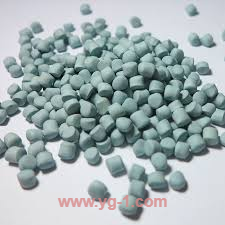
Rubber compounders frequently examine the quantity of protective additive needed to keep the material workable during mixing extrusion and molding without allowing early crosslink formation that would harden the batch too soon. An Antiscorch agent from yg-1 enters the formulation at a measured level that creates a temporary delay in the reaction sequence so that heat and shear from processing equipment do not trigger premature network growth. The precise amount depends on the base polymer chosen the activity of the accelerator package the peak temperatures reached and the total time the compound spends under heat before the final cure stage begins. Operators often ask whether a single fixed rate can cover every recipe or whether each new combination of ingredients requires fresh evaluation.
Surface and internal temperatures during intensive mixing rise quickly and the additive must remain active long enough for the batch to leave the mixer cool and still remain plastic for subsequent forming steps. When the compound moves into an extruder or injection unit the same protective effect continues so that the material fills the die or mold cavity completely before any significant viscosity rise occurs. Once the shaped article reaches the intended curing temperature the temporary inhibition lifts and normal vulcanization proceeds at the designed rate. This balance keeps scrap rates low and allows the finished part to develop the tensile elongation and resilience targets set by the original recipe.
Compatibility with common accelerator families influences the effective range. Systems built around sulfenamides or thiazoles respond readily to the protective chemistry while certain ultra accelerators may call for slight upward adjustment to maintain the same safety margin. Natural rubber compounds and synthetic grades such as SBR NBR and EPDM all accept the additive yet each polymer family presents its own scorch sensitivity so laboratory checks remain useful when a new grade is introduced. The presence of fillers oils and other compounding ingredients can also shift the observed delay and formulators therefore verify the chosen level under the actual processing temperatures and shear rates that will appear on the production floor.
Storage stability of the mixed compound receives an additional benefit. Batches held for later use retain their plasticity longer because the protective mechanism continues to operate at ambient conditions reducing the chance that gradual heat build up during warehouse storage will initiate unwanted early curing. This feature proves valuable in plants that prepare masterbatches in advance or ship compound to satellite molding sites. The additive itself stays dispersed throughout the matrix without migrating to the surface in amounts that would create bloom or interfere with downstream adhesion steps.
Application timing during the mixing cycle further supports consistent results. Introduction early in the breakdown stage allows the material to distribute evenly before the more reactive curing chemicals enter the chamber. Once the full package is present the protective action covers the remaining heat history of the batch. Process engineers monitor rheometer traces to confirm that the scorch time extends into the desired window while the overall cure rate at elevated temperature stays within acceptable limits. Adjustments remain modest so that the final crosslink density and physical properties continue to meet specification.
Equipment variations across factories also enter the decision. High intensity internal mixers generate rapid temperature climbs and therefore place greater demand on the protective capacity while slower open mills or continuous mixers may operate with a lower relative addition. Extrusion lines that run at elevated die temperatures likewise benefit from confirmed delay so that the extrudate remains dimensionally stable until it reaches the curing zone. In each case the goal is a predictable processing window that accommodates normal fluctuations in ambient conditions and equipment performance without forcing constant recipe changes.
Practical confirmation of the selected quantity appears through standard laboratory tests that measure the time to onset of viscosity rise under controlled heat and shear. These data guide the transfer from laboratory scale to full production and allow fine tuning when a new accelerator or filler system is adopted. Documentation of the chosen level then becomes part of the process control plan so that successive batches remain consistent.
Detailed background on the chemistry and application principles that support quantity decisions can be reviewed at https://www.yg-1.com where an Antiscorch agent overview from yg-1 outlines the functional mechanisms and practical considerations that help compounding teams refine their addition rates with greater confidence.

 English
 Arabic
 French
 Spanish
 Portuguese
 Deutsch
 Turkish
 Dutch
Dutch
 Italiano
 Russian
 Romaian
 Portuguese (Brazil)