


Miniature Circuit Breaker vs. MCCB Breakers: Key Differences and Uses
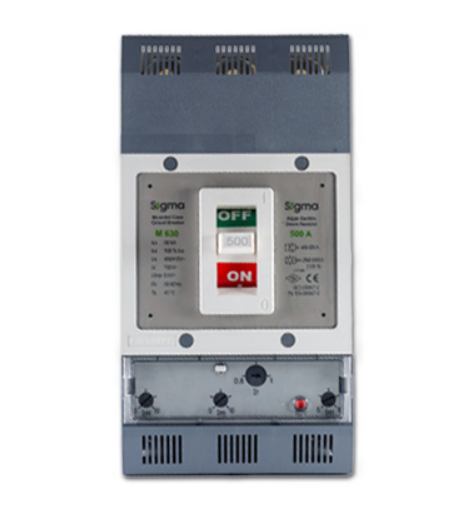
Miniature Circuit Breaker
Electrical safety is important in homes, offices, commercial buildings, and industrial facilities. Choosing the right circuit breaker helps protect electrical equipment and wiring from damage caused by overloads and short circuits. Two common types of circuit breakers are the miniature circuit breaker (MCB) and the moulded case circuit breaker (MCCB).
Although both devices provide electrical protection, they differ in their current ratings, breaking capacities, features, and applications. Understanding these differences can help you select the right protection device for your electrical system.
What Is a Miniature Circuit Breaker?
A miniature circuit breaker is an automatic electrical protection device designed to interrupt the flow of electricity when it detects an overload or short circuit. It helps prevent excessive current from damaging wires, connected equipment, and other electrical components.
MCBs are commonly used in residential buildings, offices, shops, and small commercial installations. Their compact design makes them suitable for distribution boards where space is limited.
Common Applications of Miniature Circuit Breakers
Miniature circuit breakers are commonly installed in:
-
Residential lighting circuits
-
Power sockets and household appliances
-
Small office electrical systems
-
Retail shops and small commercial buildings
-
Distribution boards with lower current requirements
Benefits of Miniature Circuit Breakers
MCBs offer several practical benefits. They are compact, easy to install, and designed to provide reliable protection for suitable electrical circuits. After a fault has been identified and corrected, an MCB can generally be reset rather than replaced, provided it has not been damaged.
Selecting the correct rating is essential. An MCB must match the circuit requirements and provide suitable protection for the installed wiring.
What Are MCCB Breakers?
Moulded case circuit breakers, commonly called MCCB breakers, are electrical protection devices designed for applications that may require higher current ratings and greater fault-interruption capacity than standard MCBs can provide.
MCCBs are widely used in industrial facilities, commercial buildings, and larger electrical distribution systems. Depending on the model, they may offer adjustable trip settings, making it possible to configure protection according to the electrical system's requirements.
Common Applications of MCCB Breakers
MCCBs are commonly used for:
-
Industrial machinery and equipment
-
Commercial building distribution panels
-
Large electrical distribution systems
-
Motor and equipment feeder circuits
-
Electrical systems with higher load requirements
The appropriate MCCB depends on the system voltage, expected fault current, load characteristics, and coordination requirements. Not every MCCB includes adjustable protection, so its specifications should be checked before purchase.
Benefits of MCCB Breakers
MCCBs can provide higher current capacity, strong short-circuit protection, and flexible protection settings, depending on the model. These features make them suitable for electrical installations that require more advanced protection than a basic miniature circuit breaker can provide.
For larger installations, selecting an appropriate MCCB can help protect equipment and support the safe operation of the electrical distribution system.
Key Differences Between Miniature Circuit Breaker and MCCB Breakers
Although MCBs and MCCBs serve a similar purpose, their designs and capabilities differ.
| Feature | Miniature Circuit Breaker (MCB) | MCCB Breakers |
|---|---|---|
| Typical application | Residential and small commercial circuits | Commercial and industrial distribution |
| Current capacity | Generally lower | Can support higher current ratings |
| Breaking capacity | Suitable for the circuit's specified fault level | Available with higher breaking capacities |
| Trip settings | Usually fixed | Fixed or adjustable, depending on the model |
| Physical size | Compact | Generally larger |
| Installation | Commonly used in distribution boards | Used in larger panels and distribution systems |
| Selection factors | Circuit load, wiring, and fault level | Load, fault level, coordination, and protection settings |
The exact ratings and features vary by product. Always compare the manufacturer's specifications instead of assuming that every MCB or MCCB has the same capabilities.
When Should You Choose a Miniature Circuit Breaker?
A miniature circuit breaker is often a suitable choice for individual circuits in homes, offices, and small commercial buildings. It can protect lighting, socket outlets, and other circuits when its rating and breaking capacity match the installation.
Consider an MCB when:
-
The circuit has a relatively low current requirement.
-
The distribution board is designed for modular circuit breakers.
-
Fixed trip characteristics meet the protection requirements.
-
The available breaking capacity is suitable for the expected fault current.
Before installation, verify the conductor size, load current, voltage, and required protection characteristics. A breaker should not be selected based only on the connected appliance's power rating.
When Are MCCB Breakers the Better Choice?
MCCBs are often more appropriate for larger electrical systems, particularly where higher current ratings or specific protection settings are required.
Consider an MCCB when:
-
The electrical system has a higher current requirement.
-
The available fault current requires a suitable higher breaking capacity.
-
Adjustable trip settings are needed and supported by the selected model.
-
Industrial or commercial equipment requires coordinated electrical protection.
-
The distribution panel is designed to accommodate an MCCB.
For example, an industrial facility with several machines may require an MCCB for a main feeder or distribution circuit. The final selection should be based on an electrical design and the manufacturer's technical information.
Factors to Consider Before Buying a Circuit Breaker
Choosing the right circuit breaker involves more than comparing sizes or prices. The following factors can help you identify a suitable product.
1. Current Rating
The current rating should match the electrical circuit's design and provide proper protection for its wiring. A higher-rated breaker is not automatically better, because an incorrectly sized breaker may fail to protect the circuit adequately.
2. Breaking Capacity
Breaking capacity indicates the maximum fault current a circuit breaker can safely interrupt under its specified conditions. The selected device must have an adequate rating for the installation's prospective short-circuit current.
3. Voltage Rating
Check that the breaker is rated for the system's operating voltage and intended AC or DC application. A device designed for one application should not be assumed suitable for another.
4. Number of Poles
Circuit breakers are available in different pole configurations. The correct option depends on the system arrangement and the conductors that need to be switched and protected.
5. Protection and Trip Settings
Some installations need fixed trip characteristics, while others require adjustable protection settings. Review the product specifications and ensure the chosen breaker supports the required protection and coordination.
6. Manufacturer Quality and Compatibility
Choose products that meet the applicable standards and are compatible with the electrical panel. Proper installation and routine inspection by a qualified electrician are also important for safe operation.
Where to Find Miniature Circuit Breaker and MCCB Breakers
Finding the right product starts with understanding the requirements of your electrical installation. Jawad Electric provides product categories for different circuit protection needs.
You can explore the available options here:
-
Miniature circuit breakers: https://www.jawadelectric.com/shop/miniature-circuit-breakers/
-
LV moulded case circuit breakers: https://www.jawadelectric.com/shop/lv-moulded-case-circuit-breaker/
Review the available product ratings, breaking capacities, and technical specifications before making a selection. If you are unsure which breaker suits your application, consult a qualified electrical professional.
Conclusion
Both miniature circuit breakers and MCCB breakers play important roles in electrical protection. MCBs are commonly used for residential and smaller commercial circuits, while MCCBs are often selected for larger commercial and industrial systems that require higher current capacity or additional protection features.
The right choice depends on the electrical load, wiring, fault level, voltage, and protection requirements of the installation. By comparing product specifications and following appropriate electrical design practices, you can choose a circuit breaker that supports safe and reliable operation.
Frequently Asked Questions
1. What is a miniature circuit breaker used for?
A miniature circuit breaker protects electrical circuits against overloads and short circuits. It is commonly used in homes, offices, shops, and small commercial buildings.
2. What is the difference between MCB and MCCB breakers?
An MCB is generally designed for lower-current circuits, while an MCCB can support higher current ratings and may offer adjustable trip settings. Their exact capabilities depend on the selected models.
3. Can an MCCB be used in a residential building?
Yes, an MCCB may be used in a residential installation when the electrical design requires it and the device is properly rated. However, MCBs are more common for individual household circuits.
4. Are MCCB breakers suitable for industrial applications?
Yes. MCCBs are widely used in industrial applications because suitable models can provide higher current ratings, appropriate fault-interruption capacity, and additional protection features.
5. How do I choose the right circuit breaker?
Consider the load current, wiring, system voltage, prospective fault current, pole configuration, and required protection settings. A qualified electrician or electrical engineer can help verify the correct selection.

 English
 Arabic
 French
 Spanish
 Portuguese
 Deutsch
 Turkish
 Dutch
Dutch
 Russian
 Romaian
 Portuguese (Brazil)
 Greek
Greek