What Is Bapesta? A Streetwear Icon Explained
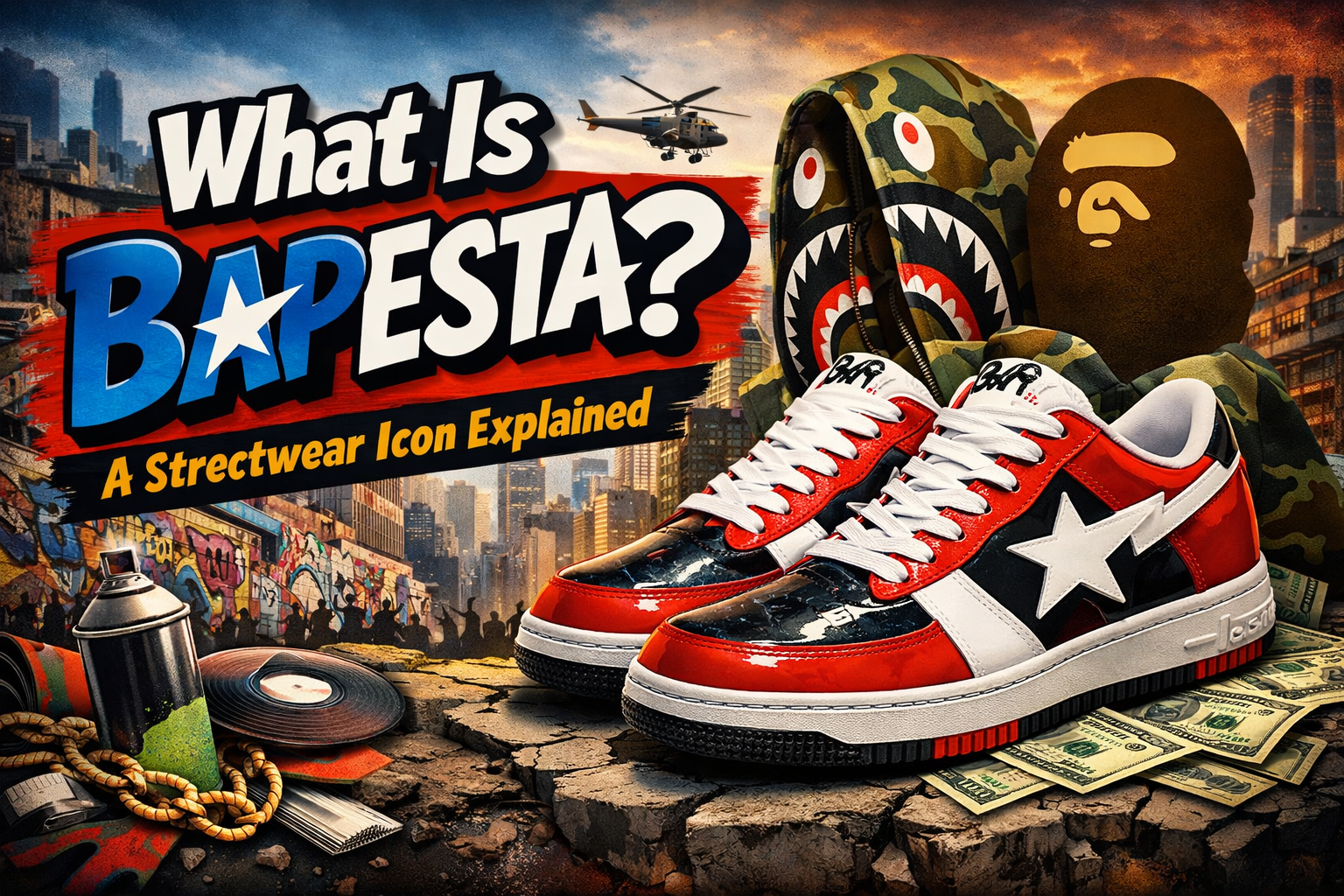
What is Bapesta? An Explanation of a Streetwear Icon
If you've ever seen a shiny sneaker with a big star on the side, usually in bright colors, and thought, "That looks familiar, but different," you were probably looking at a Bapesta. To get why this shoe became a streetwear icon, it's helpful to think of it as more than just shoes. It's also a symbol of hip-hop culture, exclusivity, and the fashion rebellion of the early 2000s.
Let's break it down so that it's easy to see and remember.
What Exactly Is a Bapesta?
A Bapesta is a sneaker created by the Japanese streetwear brand A Bathing Ape, often shortened to BAPE. The shoe debuted in the early 2000s and quickly became one of the most recognizable sneakers in streetwear history.
Simple example:
Imagine the classic white sneakers everyone wore in school—but then imagine them dipped in glossy paint, splashed with wild colors, and stamped with a bold lightning-star logo. That exaggerated, eye-catching version is the Bapesta.
The Design That Made It Iconic
At first glance, the Bapesta’s shape looks familiar. That’s not accidental.
The Star Logo (STA)
Instead of a swoosh or stripes, Bapesta uses a chunky star—called the STA—on the side.
Physical analogy:
Think of a road sign versus a handwritten note. The star logo feels like a road sign—big, bold, and impossible to miss from across the street.
Patent Leather Shine
Many Bapestas are made with glossy patent leather.
Example:
Under streetlights at night, Bapestas don’t just sit on your feet—they reflect light. They shine the way a freshly waxed sports car does, demanding attention even when you’re standing still.
Loud Colorways
Camouflage patterns, neon pinks, bright blues, mismatched panels—nothing was “too much.”
Example:
If most sneakers are background music, Bapestas are the lead guitar solo turned all the way up.
Why Did Bapesta Blow Up?
Perfect Timing in Hip-Hop Culture
In the early 2000s, hip-hop fashion was all about standing out—baggy jeans, oversized tees, flashy accessories. Bapesta fit right in.
Artists like Pharrell Williams and **Lil Wayne like Travis Scott and younger streetwear fans embraced them again.
Modern example:
Old photos from 2004 suddenly look “cool” again on social media, and Bapestas feel fresh—not because they changed, but because culture caught up to them once more.
How Bapesta Fits Into Streetwear Today
Today, Bapesta represents more than nostalgia. It stands for:
-
Creative freedom in fashion
-
Mixing luxury with playfulness
-
Confidence in standing out
Visual example:
Picture someone wearing neutral clothing—black pants, white tee—and then stepping into bright red Bapestas. Instantly, the shoes become the conversation starter.
Is Bapesta for Everyone?
Not necessarily—and that’s the point.
Bapestas aren’t designed to disappear into an outfit. They’re meant for people who enjoy bold expression.
Think of it like this:
Some people prefer minimalist art on their walls. Others want giant, colorful murals. Bapesta is the mural.
Why Bapesta Still Matters
Bapesta isn’t just a sneaker—it’s a time capsule from a moment when streetwear stopped asking for permission. Its loud colors, glossy finish, and unapologetic design remind us that fashion can be fun, rebellious, and expressive.
One last example:
If fashion were a conversation, Bapesta wouldn’t whisper. It would laugh loudly, tell a wild story, and make sure everyone remembers it.
That’s why, decades later, Bapesta remains a true streetwear icon.
Категории
- Lifestyle
- Motivation
- News & Trends
- AI
- Gadgets & Reviews
- Tech News
- Marketing
- Образование
- Health & Fitness
- Travel
- Food & Cooking
- Entertainment
- Home & Living
- Sports
- Art
- Causes
- Crafts
- Dance
- Drinks
- Film
- Fitness
- Food
- Игры
- Gardening
- Health
- Главная
- Literature
- Music
- Networking
- Другое
- Party
- Religion
- Shopping
- Sports
Больше
In today’s fast-paced lifestyle, weight gain, low energy, and slow metabolism have become common problems for many people. Busy schedules, unhealthy eating habits, stress, and lack of exercise often make it difficult to maintain a healthy body. This is where natural weight-support supplements like Burn Peak come into the picture. Burn Peak is designed to support fat burning, boost...

Running a business efficiently requires keeping your financial data accurate, organized, and always up to date. At Minding My Books, we understand how much time small businesses and accountants spend switching between different tools and systems. That’s where QuickBooks App Integration comes in, helping you automate your data flow, eliminate manual entry, and simplify your...

Access to clean, drinkable water is something many people take for granted—until it’s suddenly gone. Droughts, natural disasters, infrastructure failures, and even economic instability can disrupt water supplies without warning. In times like these, having a reliable and independent source of water becomes not just a convenience but a necessity. This is where Joseph’s Well...

Maintaining healthy skin has become increasingly challenging due to environmental exposure, stress, and changing lifestyles. Pollution, sun damage, and daily buildup of impurities often lead to dullness, acne, dehydration, and uneven texture. To address these concerns effectively, modern aesthetic treatments now focus on deep cleansing and hydration without aggressive procedures. Among...

Are you dreaming of an unforgettable Nepal experience in 2026? A journey where spirituality, natural beauty, and rich cultural heritage blend seamlessly into one incredible adventure? If yes, then the Best Raxaul to Nepal Tour Package 2026 — Pashupatinath, Pokhara & Lumbini is designed especially for travelers like you. This meticulously crafted package offers the perfect mix of...