


How Counselling Helps Identify Triggers and Harmful Patterns
How Counselling Helps Identify Triggers and Harmful Patterns
Most people who struggle with addiction can tell you what they used and roughly when it got out of hand. Very few can tell you why. That gap between knowing the habit and understanding the cause is exactly where counselling earns its place in recovery — it's not just talking, it's detective work, done patiently, session after session.
The habit is rarely the real problem
A person doesn't wake up one day and randomly decide to drink or use. There's almost always something underneath it — stress that never got processed, grief nobody talked about, a relationship that felt unbearable, or just years of coping with anxiety using whatever was available. The substance becomes a shortcut. It works, at least for a while, which is exactly why it's so hard to let go of without something replacing it.
Counsellors are trained to dig past the surface habit and find that underlying "something." Without identifying it, treatment tends to be shallow — someone might stop using for a few months, only to relapse the moment the original stress resurfaces, because nothing ever addressed what was driving the behaviour in the first place.
What counts as a trigger, really?
This surprises a lot of families. Triggers aren't always obvious things like being offered a drink at a party. They're often quieter and far more personal.
-
A specific time of day (evenings alone, for instance, when boredom or loneliness creeps in)
-
Certain people, even well-meaning ones, who remind the person of old using patterns
-
Emotional states like frustration, sadness, or even excitement
-
Physical locations tied to memories — a particular bar, a friend's house, sometimes even a room at home
-
Financial stress or unresolved family conflict resurfacing unexpectedly
None of these are things a person typically notices on their own, mostly because they've never had to look that closely at their own behaviour before. This is where one-on-one sessions matter — a trained counsellor asks the kind of questions that surface patterns the person themselves has never consciously connected.
How sessions actually uncover these patterns
Cognitive Behavioural Therapy tends to be the backbone of this process, and for good reason. It works by tracing a chain: situation, thought, feeling, action. A counsellor will walk a patient back through a recent craving or relapse and pick apart exactly what happened right before it — not in a vague way, but almost forensically. What were you thinking right then? What did you feel in your body? What happened five minutes before that?
Do this enough times, across enough sessions, and patterns start emerging that the person never noticed while they were living inside them. Maybe every relapse happened after an argument with a specific family member. Maybe cravings always spike on Sunday evenings, right before the work week starts. Once a pattern is named, it becomes something a person can actually plan around, instead of being blindsided by it every time.
Group therapy adds something individual sessions can't
There's a strange comfort in hearing someone else describe a trigger you thought was uniquely yours. Group therapy sessions bring this out in ways individual counselling sometimes can't reach.
-
Patients often recognise their own patterns while listening to someone else's story
-
Peer feedback tends to land differently than advice from a therapist, because it comes from someone who's actually lived it
-
Watching others build relapse prevention strategies gives newer patients a template they can adapt for themselves
-
The shared setting reduces the shame that often keeps people from admitting their real triggers in the first place
This combination — individual sessions digging deep, group sessions reinforcing and normalising — is usually what makes the identification process stick rather than fade after a few weeks.
Why this matters more than people expect
Skipping this part of treatment is one of the most common reasons relapse happens months down the line. Someone gets through detox, feels physically fine, and assumes the hard part is over. Then life throws a familiar trigger their way, and without ever having examined that pattern, they're right back where they started. Counselling isn't a formality tacked onto detox — it's arguably the part of treatment that determines whether recovery actually holds.
Finding the right support in Delhi
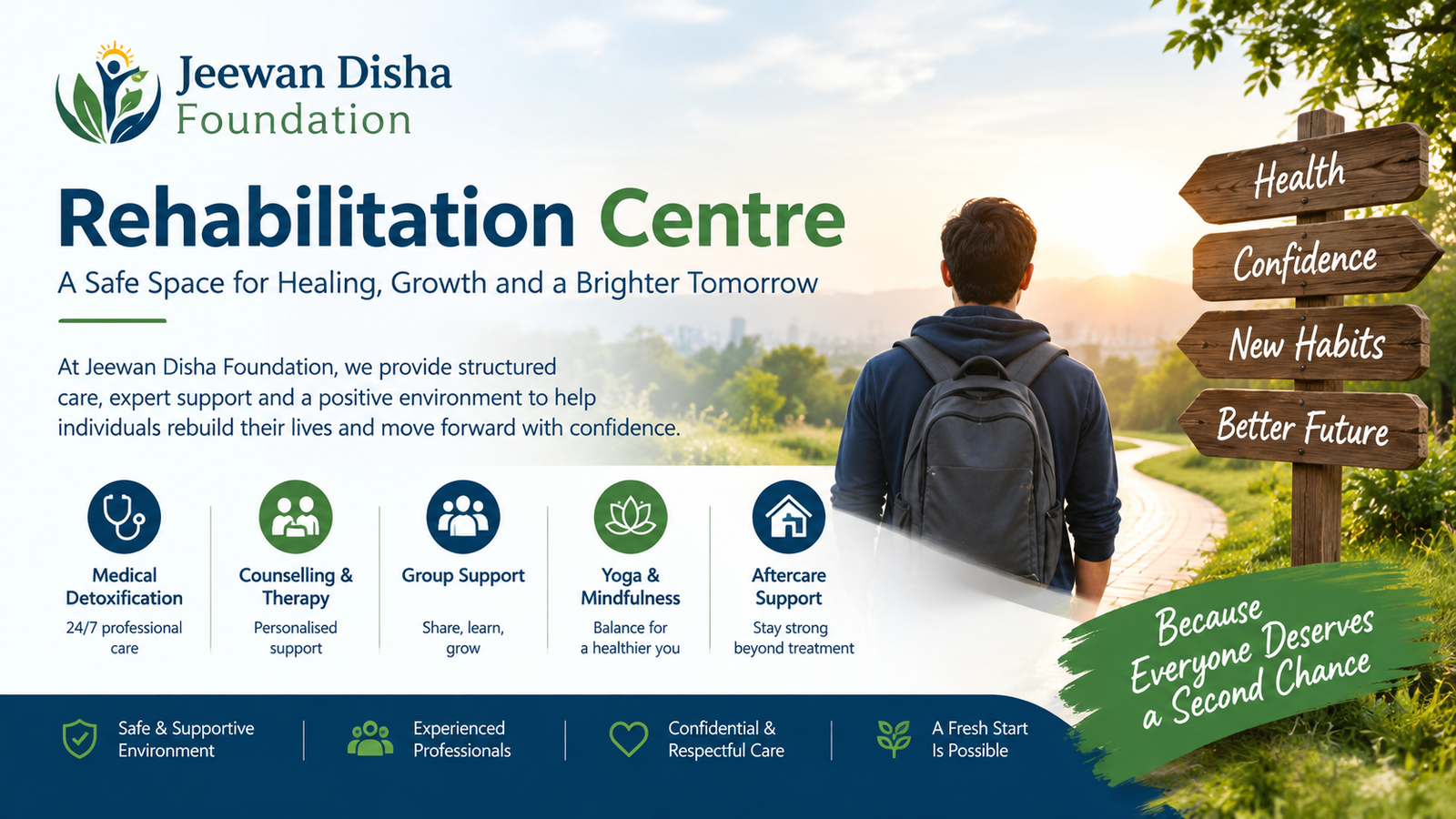
If someone you know keeps relapsing without understanding why, structured counselling is usually the missing piece, not more willpower. A trusted Nasha Mukti Kendra in Delhi, like Jeewan Disha Foundation, builds individual CBT sessions alongside group therapy specifically to uncover these patterns rather than just managing the physical side of addiction.
For families weighing their options, it's worth remembering that quality care doesn't always mean the most expensive centre. Top Nasha Mukti Kendra Delhi is usually the one that takes time to understand a patient's specific triggers, builds a plan around them, and stays involved well past the initial weeks of treatment.

 English
 Arabic
 French
 Spanish
 Portuguese
 Deutsch
 Turkish
 Dutch
Dutch
 Italiano
 Russian
 Romaian
 Portuguese (Brazil)