


How AI Test Generators Evolve QA Practices in DevOps Teams?
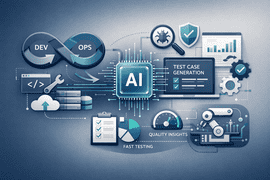
In modern software development, DevOps teams are constantly under pressure to deliver high-quality software at speed. As release cycles shorten and applications grow more complex, traditional testing approaches can struggle to keep up. AI test generators have emerged as a transformative tool, reshaping how QA teams approach test case creation, maintenance, and execution. By leveraging artificial intelligence, these tools enhance efficiency, reduce human error, and allow teams to focus on higher-value testing activities.
The Role of AI Test Generators in DevOps
AI test generators are tools that use machine learning and natural language processing to automatically create test cases based on application behavior, code changes, or user workflows. Unlike traditional manual test design, AI can analyze patterns in the application, historical bug data, and usage scenarios to generate relevant and optimized test cases.
For DevOps teams practicing continuous integration and continuous delivery, AI test generator provides a way to scale testing without overwhelming the team. They can automatically create regression tests, functional tests, and edge case scenarios, reducing reliance on manual effort while maintaining thorough coverage.
Streamlining Test Case Creation
One of the most time-consuming tasks in QA is creating and maintaining test cases. AI test generators accelerate this process by analyzing code commits, user interactions, and historical test data. This allows teams to:
- Generate test cases automatically for newly added features.
- Identify missing test scenarios based on previous defects or usage patterns.
- Update existing test cases when application behavior changes.
This automation reduces the risk of oversight and ensures that critical workflows are consistently validated. Teams no longer need to manually anticipate every potential failure, allowing them to focus on higher-priority or exploratory testing.
Enhancing Test Coverage and Efficiency
AI test generators can significantly improve test coverage. In large or complex applications, manually designing comprehensive test suites is often impractical. AI-generated tests can identify edge cases and combinations of inputs that might be missed by human testers. By integrating these tests into automated pipelines, DevOps teams can achieve faster feedback loops without sacrificing quality.
For example, in a SaaS application with multiple interdependent modules, manually maintaining regression tests would require significant effort and risk of human error. By using an AI test generator, the team can automatically update regression suites to reflect recent changes, ensuring that critical functionality is always verified while maintaining efficiency.
Integrating AI Test Generators with Continuous Delivery
In DevOps pipelines, speed and reliability are equally important. AI test generators fit seamlessly into CI/CD workflows by:
- Running automatically after each code commit to generate or update relevant test cases.
- Reducing the number of redundant or outdated tests, which helps maintain pipeline speed.
- Providing feedback to developers on areas that may require additional testing or attention.
This integration allows teams to maintain rapid deployment cycles while ensuring software stability and quality.
Practical Insights from Production Teams
Several organizations have reported tangible benefits from adopting AI test generators:
- Reduced Test Maintenance: Teams spend less time rewriting or updating test cases for new features.
- Improved Defect Detection: AI-generated tests capture edge cases that were previously overlooked, reducing post-release defects.
- Faster Onboarding: New team members can leverage AI-generated test cases to understand application behavior more quickly.
In one production scenario, a DevOps team managing a large microservices architecture found that AI test generators reduced the time to update regression suites by over 60%, allowing the team to release updates twice as frequently without increasing risk.
Addressing Challenges
Despite the benefits, implementing AI test generators comes with challenges:
- Trust in Generated Tests: Teams must validate that AI-generated tests accurately reflect expected functionality.
- Initial Setup and Integration: Integrating AI tools into existing CI/CD pipelines requires careful planning.
- Balancing Automation and Manual Insight: While AI can generate many tests, human oversight is essential for complex scenarios and exploratory testing.
By addressing these challenges through gradual adoption and validation, teams can maximize the value of AI test generators while minimizing risks.
Conclusion
AI test generators are redefining QA practices within DevOps teams by automating test case creation, enhancing coverage, and accelerating feedback loops. These tools complement traditional testing approaches and allow teams to focus on higher-value tasks while maintaining rapid delivery cycles. Integrating AI test generators into automated pipelines ensures that critical workflows are continuously validated, supporting software quality in complex and fast-moving environments.
Ultimately, AI test generators are more than just a tool—they represent a shift in how teams approach software testing basics, enabling DevOps teams to deliver software confidently, reliably, and at speed. For organizations striving to balance velocity with quality, adopting AI-driven testing is becoming an essential component of modern QA strategy.
Categorie
- Lifestyle
- Motivation
- News & Trends
- AI
- Gadgets & Reviews
- Tech News
- Marketing
- Formazione
- Health & Fitness
- Travel
- Food & Cooking
- Entertainment
- Home & Living
- Sports
- Art
- Causes
- Crafts
- Dance
- Drinks
- Film
- Fitness
- Food
- Giochi
- Gardening
- Health
- Home
- Literature
- Music
- Networking
- Altre informazioni
- Party
- Religion
- Shopping
- Sports
Leggi tutto
Introduction Every day, thousands of cricket fans search for a reliable cricket online id. They want to join live leagues, track player stats, and enjoy matches more interactively. But here is the problem. Not every platform offering a cricket online id is trustworthy. Some disappear with user deposits. Others sell personal data to third parties. Many have slow or non-existent customer...

A straighter smile can change how people feel about themselves, but the path to getting there should not feel disruptive or outdated. For many adults and teens in Northern Virginia, traditional braces are not an appealing option. That is why teeth aligners have become a preferred solution for improving alignment in a way that feels modern, discreet, and manageable. At AO Aligners, orthodontic...

In the race to digitize products and services, many organizations believe the competitive edge lies in technology alone. Yet across industries, a different pattern is emerging: products with similar technology stacks deliver dramatically different business outcomes. The distinguishing factor is rarely code it is experience. Enterprises that embed experience thinking early in product development...

Creating an appropriate atmosphere in a gym or fitness area holds equal value to the actual exercise routines. The equipment and lighting systems provide support to the fitness space but people frequently neglect the importance of its scent. The correct diffuser oils provide three benefits which include mind stimulation and odor removal and improved workout results. Diffuser oils provide clear...

A Serengeti National Park Safari is one of the most exciting ways to explore Africa’s wildlife and breathtaking landscapes. Located in northern Tanzania, the Serengeti is famous for its vast plains and incredible variety of animals. It is one of the most popular safari destinations in the world, attracting travelers who want to witness wildlife in its natural environment and...