


Indications and Contraindications for Liver Transplant Surgery
Introduction
When the liver stops working properly, it can affect almost every system in your body. Think of your liver as a filter and factory combined—it removes toxins, processes nutrients, and produces essential proteins. But what happens when this vital organ fails?
That’s where liver transplant surgery comes into the picture. It can be life-saving—but it’s not for everyone. So, how do doctors decide who needs a transplant and who doesn’t?
Let’s break it down in simple, real-world language so you can truly understand.
Introduction
Your liver works silently in the background—filtering toxins, digesting food, and keeping your body balanced. But what happens when this hardworking organ starts failing?
Think of your liver like a water purifier for your body. When it stops working, harmful substances begin to build up, affecting every part of your health. In such cases, a liver transplant can be life-saving.
However, not everyone with liver disease needs or qualifies for a transplant. So, how do doctors decide? Let’s break it down in a simple, easy-to-understand way.
. Understanding Liver Transplant
A liver transplant is a surgery where a damaged liver is replaced with a healthy one from a donor. It’s usually considered when the liver is so damaged that it can no longer perform essential functions.
This isn’t a routine procedure—it’s a carefully planned, life-saving treatment offered to selected patients.
2. When Is a Liver Transplant Needed?
You might be wondering, “Can medicines not fix liver problems?”
In early stages, yes. But in advanced cases, the damage becomes irreversible. That’s when doctors start considering a transplant.
Common situations include:
-
Severe liver damage
-
Life-threatening complications
-
Poor quality of life
3. Key Indications for Liver Transplant
Indications simply mean the medical reasons why a transplant is needed.
Let’s look at the most common ones.
4. Chronic Liver Disease and Cirrhosis
This is the leading cause of liver transplants worldwide.
Cirrhosis happens when healthy liver tissue is replaced with scar tissue over time.
Main causes:
-
Hepatitis B and C
-
Fatty liver disease
-
Long-term alcohol use
Symptoms:
-
Swelling in abdomen
-
Yellowing of skin (jaundice)
-
Confusion or memory problems
When these symptoms become severe, a transplant becomes the best option.
5. Acute Liver Failure
This condition develops suddenly, often within days.
It’s like your liver “crashing” unexpectedly.
Possible causes:
-
Drug overdose (especially paracetamol)
-
Viral infections
-
Toxic substances
This is a medical emergency, and immediate transplant may be required.
6. Liver Cancer and Tumors
Some types of liver cancer can be treated with a transplant.
Who qualifies?
-
Patients with small, localized tumors
-
No spread outside the liver
A transplant removes both the cancer and the damaged liver, offering a better long-term outcome.
7. Genetic and Metabolic Disorders
Certain inherited conditions can damage the liver over time.
Examples:
-
Wilson’s disease
-
Hemochromatosis
-
Alpha-1 antitrypsin deficiency
In such cases, transplant can completely cure the underlying problem.
8. Alcohol-Related Liver Disease
Alcohol can severely damage the liver over time.
However, transplant is considered only if:
-
The patient has stopped drinking (usually for at least 6 months)
-
There is commitment to long-term lifestyle changes
This ensures better success after surgery.
9. What Are Contraindications?
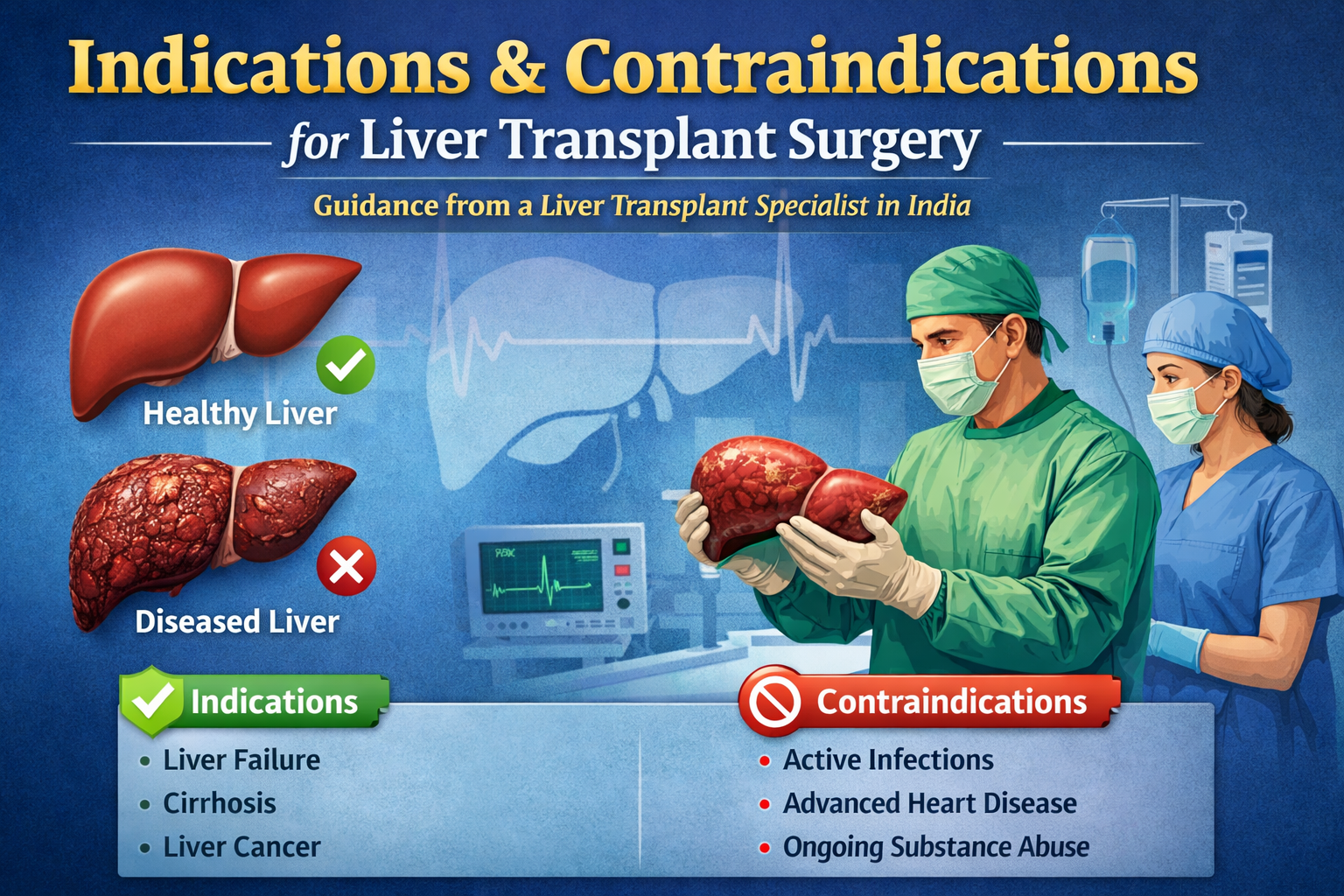
While indications explain who needs a transplant, contraindications explain who should not undergo it.
These are important because transplant surgery is complex and carries risks.
10. Absolute Contraindications
These conditions make liver transplant unsafe or ineffective.
Examples include:
-
Active infections that cannot be controlled
-
Advanced heart or lung disease
-
Cancer spread beyond the liver
-
Ongoing alcohol or drug abuse
In these cases, transplant may not improve survival.
11. Relative Contraindications
These are borderline situations.
Doctors carefully assess whether the patient can still benefit from transplant.
Examples:
-
Older age
-
Obesity
-
Mild heart problems
-
Previous major surgeries
Each case is evaluated individually.
12. Pre-Transplant Evaluation
Before a transplant, patients undergo a detailed medical assessment.
This includes:
-
Blood tests
-
Imaging scans
-
Heart and lung function tests
-
Mental health evaluation
It’s like preparing for a big journey—you need to be fit enough to handle it.
13. Role of a Liver Transplant Specialist
A skilled liver transplant specialist in india plays a key role throughout the process.
They help with:
-
Diagnosing liver conditions
-
Determining eligibility
-
Performing surgery
-
Managing post-transplant care
Choosing the right expert can significantly improve outcomes.
14. Risks and Benefits
Every major surgery comes with risks—but also potential rewards.
Benefits:
-
Longer life expectancy
-
Improved quality of life
-
Relief from severe symptoms
Risks:
-
Infection
-
Organ rejection
-
Lifelong medications
For many patients, the benefits far outweigh the risks.
15. When Should You See a Doctor?
Don’t ignore early warning signs.
Seek medical help if you notice:
-
Persistent fatigue
-
Yellowing of eyes or skin
-
Swelling in abdomen or legs
-
Sudden weight loss
Early consultation with a liver transplant specialist in india can make a huge difference.
Conclusion
Liver transplant surgery is a powerful, life-saving option—but it’s not suitable for everyone. Understanding the indications and contraindications helps patients and families make informed decisions.
If you think you or someone close to you might need help, don’t wait. Timely evaluation by a qualified specialist can open the door to better health and a second chance at life.
FAQs
1. What are the main indications for liver transplant?
Chronic liver disease, acute liver failure, liver cancer, and genetic disorders are the main reasons.
2. Who is not eligible for liver transplant?
Patients with uncontrolled infections, widespread cancer, or active substance abuse are usually not eligible.
3. How long does a liver transplant last?
With proper care, many patients live 10–20 years or more after transplant.
4. Is liver transplant risky?
Yes, but with modern techniques and experienced doctors, success rates are high.
5. How do I find the right specialist in India?
Look for an experienced liver transplant specialist in india with a strong track record and a multidisciplinary team.
Categories
- Lifestyle
- Motivation
- News & Trends
- AI
- Gadgets & Reviews
- Tech News
- Marketing
- Education
- Health & Fitness
- Travel
- Food & Cooking
- Entertainment
- Home & Living
- Sports
- Art
- Causes
- Crafts
- Dance
- Drinks
- Film
- Fitness
- Food
- Games
- Gardening
- Health
- Home
- Literature
- Music
- Networking
- Other
- Party
- Religion
- Shopping
- Sports
Read More
Przygotowanie do ważnego egzaminu nie zawsze jest łatwe. W moim przypadku największym problemem był brak czasu. Pracowałem, miałem codzienne obowiązki i trudno było znaleźć kilka godzin dziennie na naukę. Na początku próbowałem uczyć się sam z książek i starych notatek. Szybko jednak zauważyłem, że bez dobrego planu trudno utrzymać regularność i motywację. Dlatego zacząłem szukać...

If you’ve been investing through a SIP for some time, you may have noticed something confusing. The returns shown for your investments are not always the same across platforms. Sometimes you see CAGR, sometimes XIRR, and often the numbers don’t match. This naturally leads to questions. Is one of them wrong? Are your investments underperforming? Or is there something you’re...

Why More People Are Exploring Wellness Practices Many people today explore réflexologie plantaire Caen as part of a healthier and more balanced lifestyle. Daily routines often include long hours at work, screen exposure, travel, and physical fatigue. Over time, these habits can affect both mental and physical well-being. This is one reason wellness practices have become more common in...

Your Ultimate Guide to Easily Passing the 300-410 A significant step is passing a test. It improves your quality of life. You land a new position. You make more money. You are really pleased with your job. However, you need to properly study 300-410. Many people put a lot of effort into their studies. They read large volumes. They become really exhausted. That is not required of you. A better...

Nel panorama digitale contemporaneo, i siti poker online operano all’interno di un quadro normativo estremamente articolato che varia significativamente da giurisdizione a giurisdizione, riflettendo differenze culturali, economiche e politiche nella gestione del gioco d’azzardo online. Questa complessità legislativa ha portato alla nascita di un sistema multilivello in...