


Best Air Track Drills to Improve Tumbling and Acrobatics
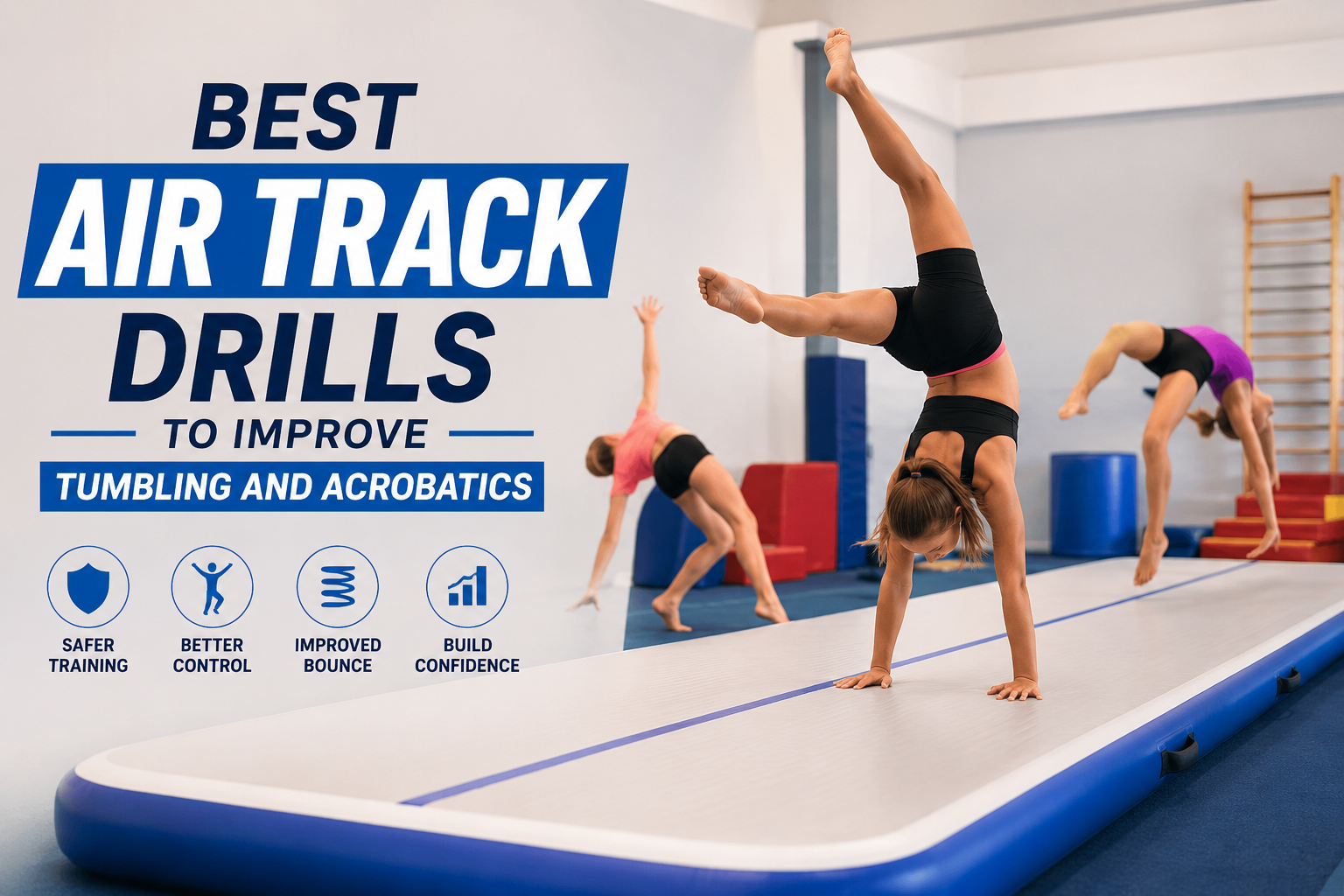
Tumbling and acrobatics require strength, flexibility, balance, and confidence. Whether you are a beginner learning basic movements or an advanced athlete refining flips and aerial skills, practicing on the right surface can make a major difference. An Air track provides a soft yet responsive training area that helps athletes improve technique while reducing impact on the body.
Inflatable gymnastics mats have become increasingly popular among gymnasts, cheerleaders, dancers, and martial artists because they create a safer and more comfortable environment for repetitive training. They are designed to offer excellent rebound, shock absorption, and portability, making them suitable for both home and professional use.
This guide covers some of the most effective drills to improve tumbling and acrobatic performance while helping athletes build confidence step by step.
Why Train on an Air Track?
An inflatable training surface gives athletes the ability to practice skills with better cushioning and support compared to traditional flooring. The gentle bounce helps improve momentum and control during jumps, flips, and transitions.
Some key benefits include:
-
Reduced pressure on joints and muscles
-
Better confidence during skill progression
-
Improved rebound for tumbling passes
-
Safer landings during practice
-
Portable and easy-to-store equipment
-
Suitable for indoor and outdoor training
Many athletes and coaches choose products from AirTumble because of their durable materials and reliable performance for gymnastics and acrobatics.
1. Forward Roll Drill
The forward roll is one of the first movements beginners should master because it teaches body awareness and coordination.
Steps
-
Stand with feet shoulder-width apart
-
Bend down and place hands on the mat
-
Tuck the chin toward the chest
-
Roll smoothly forward
-
Stand up without using hands for support
Benefits
-
Improves coordination
-
Builds core control
-
Develops confidence in movement transitions
Practicing this drill regularly creates a strong foundation for more advanced tumbling skills.
2. Handstand Hold Drill
Handstands are essential for developing balance and upper body strength.
Steps
-
Kick into a handstand position
-
Keep arms straight and core engaged
-
Hold the position for several seconds
-
Return carefully to standing
Benefits
-
Strengthens shoulders and arms
-
Improves body alignment
-
Builds balance and stability
The soft surface makes learning inversions more comfortable, especially for beginners.
3. Cartwheel Drill
Cartwheels help athletes understand side-to-side movement and body coordination.
Steps
-
Begin in a lunge position
-
Place hands down one at a time
-
Kick legs over the body
-
Land in the opposite lunge position
Benefits
-
Enhances coordination
-
Improves flexibility
-
Prepares athletes for round-offs and aerials
Repeated practice helps improve control and confidence.
4. Round-Off Drill
The round-off is an important skill that creates momentum for advanced tumbling passes.
Steps
-
Start like a cartwheel
-
Snap legs together during rotation
-
Push strongly through the shoulders
-
Land with both feet together
Benefits
-
Generates power for tumbling combinations
-
Improves rebound and speed
-
Develops explosive movement
This drill is commonly used to prepare for back handsprings and advanced acrobatic sequences.
5. Backward Roll Drill
Backward rolls help athletes become comfortable moving in reverse directions.
Steps
-
Sit in a tucked position
-
Roll backward over the shoulders
-
Push through the hands
-
Return smoothly to standing
Benefits
-
Improves flexibility
-
Builds spatial awareness
-
Increases confidence in backward movement
This is especially useful for younger gymnasts learning foundational skills.
6. Front Tuck Drill
Front tucks are one of the most exciting skills in tumbling.
Steps
-
Jump upward with power
-
Pull knees tightly toward the chest
-
Rotate forward
-
Focus on controlled landings
Benefits
-
Improves air awareness
-
Builds explosive strength
-
Enhances rotational control
Practicing on a cushioned surface helps athletes train more confidently while reducing impact during landings.
7. Back Handspring Drill
The back handspring is a key movement in gymnastics and cheerleading routines.
Steps
-
Sit back into a squat position
-
Swing arms upward
-
Jump backward onto the hands
-
Push strongly through the shoulders
-
Snap feet down to land
Benefits
-
Builds upper body strength
-
Improves timing and coordination
-
Increases confidence for advanced skills
Consistent repetition is important for mastering this technique safely.
8. Tuck Jump Drill
Tuck jumps help athletes improve jumping mechanics and body control.
Steps
-
Jump upward explosively
-
Pull knees toward the chest
-
Land softly with bent knees
-
Repeat with controlled movements
Benefits
-
Improves jumping power
-
Enhances body awareness
-
Strengthens core muscles
This simple exercise is highly effective for developing athletic performance.
9. Walkover Drill
Front and back walkovers are excellent for improving flexibility and movement control.
Steps
-
Move into a bridge position
-
Shift body weight through the hands
-
Kick legs over smoothly
-
Finish in a standing position
Benefits
-
Improves flexibility
-
Strengthens shoulders and back
-
Enhances coordination
The supportive surface allows athletes to practice repeatedly with greater comfort.
10. Tumbling Pass Combinations
After mastering individual drills, athletes can begin combining movements into complete sequences.
Example Combination
-
Round-off
-
Back handspring
-
Back tuck
Benefits
-
Improves rhythm and timing
-
Builds endurance
-
Enhances overall performance
Combination drills help athletes transition smoothly between skills during routines and competitions.
Safety Tips for Training
Safe practice is essential for long-term progress in tumbling and acrobatics.
Important Tips
-
Warm up before every session
-
Practice new skills under supervision
-
Keep the mat properly inflated
-
Train in a clear and open space
-
Focus on proper technique before speed
-
Avoid overtraining
Using quality equipment also helps athletes train more safely and comfortably. Many families and gymnastics clubs prefer AirTumble products because they are designed for durability, stability, and consistent rebound.
Final Thoughts
Tumbling and acrobatics require patience, consistency, and proper training methods. Using an Air track can help athletes improve confidence, coordination, flexibility, and overall technique while reducing stress on the body.
From beginner drills like forward rolls and cartwheels to advanced skills such as back handsprings and front tucks, the right practice routine can significantly improve performance over time. Regular repetition, safe progression, and quality equipment are the keys to building strong acrobatic skills.
Whether training at home or in a gym, athletes of all levels can benefit from structured drills and consistent practice sessions.
FAQs
1. What is an Air track used for?
It is commonly used for gymnastics, cheerleading, tumbling, martial arts, dance, and acrobatics practice.
2. Is it suitable for beginners?
Yes, beginners often find inflatable training mats safer and more comfortable for learning basic skills.
3. Can it be used outdoors?
Yes, most inflatable mats can be used outdoors on clean and level surfaces.
4. How do you maintain an inflatable gymnastics mat?
Keep it clean, avoid sharp objects, and store it properly after use to extend its lifespan.
5. Which tumbling skills can beginners start with?
Beginners should start with rolls, handstands, cartwheels, bridges, and walkovers before progressing to advanced flips and handsprings.
Categorías
- Lifestyle
- Motivation
- News & Trends
- AI
- Gadgets & Reviews
- Tech News
- Marketing
- Educación
- Health & Fitness
- Travel
- Food & Cooking
- Entertainment
- Home & Living
- Sports
- Art
- Causes
- Crafts
- Dance
- Drinks
- Film
- Fitness
- Food
- Juegos
- Gardening
- Health
- Home
- Literature
- Music
- Networking
- Other
- Party
- Religion
- Shopping
- Sports
Read More
Healthcare brands in India are increasingly competing for the same patient pool online. To stand out, organisations need more than a website — they need a strategy. These 10 creative digital marketing strategies for healthcare growth have been proven to deliver measurable results for clinics, hospitals, and wellness brands alike. Why Strategy Beats Tactics Alone Tactical activity without...

Internet privacy has become a major concern for both individuals and businesses. People now use smartphones and laptops for banking, remote work, shopping, communication, and entertainment. At the same time, cyber threats and online tracking continue to increase. This growing concern has made the private VPN an important tool for users who want more control over their online...

Your Ultimate Guide to Easily Passing the IIA-ACCA A significant step is passing a test. It improves your quality of life. You land a new position. You make more money. You are really pleased with your job. However, you need to properly study IIA-ACCA. Many people put a lot of effort into their studies. They read large volumes. They become really exhausted. That is not required of you. A better...

In nowadays’s rapid-paced virtual international, the decision for a dependable cricket identity app has grown swiftly among online fans. With cricket being one of the most followed sports, customers are constantly seeking out short and regular methods to get right of entry to making a bet system. A contemporary cricket identity app simplifies the whole technique, allowing customers to get...

When it comes to men’s fashion, trousers play a major role in defining a polished and professional appearance. Whether you are dressing for business, formal occasions, or everyday style, the fit and quality of your trousers can make a significant difference. Many people often choose between bespoke trousers and off-the-rack pants, but the two options are quite different in terms of fit,...