


Exploring the History of Vintage Diamond Engagement Rings
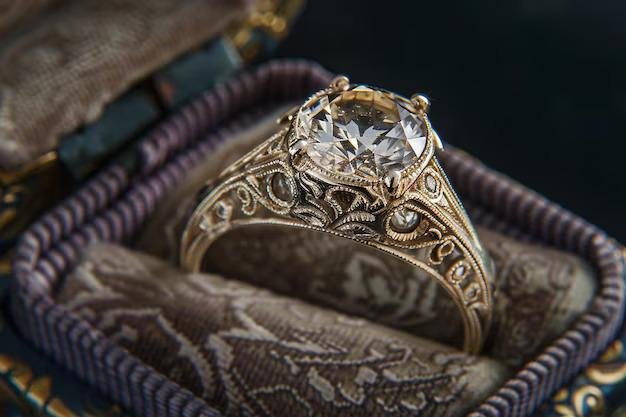
There’s something strange about old rings. Not strange-bad. Just… strange in the way history can sit quietly in your palm.
When we talk about vintage diamond engagement rings, we’re not just talking about jewelry. We’re talking about objects that have outlived the hands that first wore them. Rings that saw wars, recessions, roaring parties, and handwritten love letters. Rings that were slipped onto trembling fingers in candlelit rooms long before electricity hummed in every wall. And maybe that’s the real beginning. Not the date. Not the era. The feeling.
Where Did Vintage Diamond Engagement Rings Even Begin?
You could say the story starts in 1477, when Archduke Maximilian of Austria proposed with a diamond ring. Historians love that detail. It feels official.
But honestly? The heart of Vintage Diamond Engagement Rings probably began much later—when craftsmanship meant sitting at a wooden bench for hours, shaping metal by hand, and breathing in the faint smell of polish and dust.
In the Victorian era (1837–1901), rings were romantic in a way that almost feels excessive now. Hearts. Flowers. Serpent motifs. Diamonds paired with colored gemstones. Yellow gold glowing softly under gaslight. The diamonds weren’t cut for blinding sparkle like today; they flickered. They shimmered quietly.
And that quiet shimmer feels important. Because back then, diamonds weren’t about status the way they became later. They were personal. Symbolic. Sort of like carrying a secret.
The Lace-Like Beauty of Edwardian Rings
Then the 1900s arrived, and everything felt lighter. Airier. Edwardian rings—those delicate, platinum creations from the early 20th century—looked like lace made of metal. Intricate filigree. Tiny milgrain edges you can feel if you run your thumb across the surface. The metal is cool at first, then strangely warm.
It’s funny… platinum became popular partly because new technology made it easier to work with. Progress shaping romance. I guess that’s always happening.
These rings are often grouped under Vintage Engagement Rings, and for good reason. They capture that old-world softness, that sense of care you can’t fake. No shortcuts. No mass production lines humming in the background. Just hands. Tools. Time.
Then Came the Geometry—Art Deco
And suddenly—sharp lines. The 1920s and 30s changed everything. Art Deco rings were bold, structured, and unapologetic. Emerald cuts. Asscher cuts. Diamonds arranged in crisp symmetry. You can almost hear jazz playing in the background when you look at them.
I could list technical details here about step cuts and architectural influence, but that’s not really what matters, is it? What matters is that these rings reflected a world speeding up. Skyscrapers rising. Hemlines are shortening. Women voting. Energy everywhere.
Vintage Diamond Engagement Rings from the Art During the deco period, don’t whisper. They declare. And honestly? That confidence still feels modern.
The War Years and the Retro Era
Then came the 1940s. Metal shortages during World War II meant platinum became scarce. Yellow and rose gold stepped back into the spotlight. Designs grew bolder, chunkier even. Big center stones. Dramatic curves.
Retro-era rings feel different in your hand—heavier and warmer in tone. There’s something comforting about that weight. Solid. Assured.
I read once that during the war, people held onto beauty more tightly. As if beauty could anchor them. Maybe that’s why these rings feel resilient. Not delicate. Not fragile. Just steady.
So What Makes a Ring “Vintage”?
It’s not just age, although technically a ring must be at least 20–30 years old to be considered vintage. Antique is older—over 100 years. But here’s where it gets blurry.
Today, many couples choose Vintage-Style Engagement Rings—newly made rings that borrow design details from those earlier eras. Milgrain edges. Filigree patterns. Old-European cut diamonds recreated with modern precision. And they’re beautiful. Truly.
Then there are vintage-inspired engagement rings, which take a looser approach. A nod to the past, but not a replica. Maybe it’s the setting shape. Maybe it’s the metal choice. They blend history with durability, because let’s be honest, modern life is busy. We type, lift, and commute. We need strength. Still… There's something about an original. A real one. A ring that already lived.
The Diamond Cuts Tell the Story
Modern brilliant cuts are engineered for sparkle. Maximum light return. Technical perfection. Older diamonds? They weren’t cut with lasers and algorithms. They were shaped by eye. By candlelight sometimes. Old Mine cuts are slightly cushiony and a little uneven. Old European cuts have smaller tables and higher crowns. They glow instead of flash.
It’s not the shine. It’s the depth. The softness. The way the light pools inside instead of exploding outward. And maybe that subtlety is why vintage diamond engagement rings feel so personal. They don’t scream for attention. They invite you closer.
Why We’re Still Drawn to Them
It’s strange how trends circle back. Minimalism came and went. Halo settings surged. Lab diamonds rose in popularity. Everything changes, sort of. But people keep returning to vintage engagement rings. Why?
Maybe because in a world of overnight shipping and endless scrolling, something old feels grounding. You can see tiny hand-engraved lines under magnification—imperfect and slightly asymmetrical. Made by someone who cared.
And there’s sustainability, too. Choosing a vintage ring means no new mining. No new extraction. Just re-wearing history. That matters to a lot of couples now. But beyond ethics or aesthetics… it’s emotion. You can’t mass-produce that.
The Emotional Weight of History
Here’s the part no. the catalog mentions. When you slide on a ring that’s been worn before, you sometimes wonder about the first proposal. Was she surprised? Did she cry? Did they argue sometimes about small, ordinary things like dishes or money?
Did they stay together? We don’t know. And somehow that mystery adds depth. The metal might have faint scratches you can barely see. The prongs may have been rebuilt once or twice. It smells faintly of polish when freshly cleaned. It feels cool in the morning air. These details aren’t flaws. They’re proof of life.
Modern Love, Old Rings
Today’s couples are mixing eras freely. A Victorian diamond reset into a minimalist band. An Art Deco center stone placed in a modern bezel. The lines blur. Some choose authentic vintage diamond engagement rings for the history. Some prefer vintage-style engagement rings for the look without the fragility.
Others lean toward Vintage Inspired Engagement Rings because they want flexibility — custom sizing, reinforced settings, ethical sourcing. There’s no right choice. Just the one that feels right. And honestly? That’s enough.
Why History Still Matters
We live fast now. Faster than ever. But when you hold one of these rings, time slows a little. You notice the faint engraving. The way the diamond doesn’t sparkle aggressively but glows, steady and sure. You feel the weight of gold warmed by skin.
And you realize that love—real love—isn't loud all the time. It’s built slowly. Carefully. Over years. That’s what Vintage Diamond Engagement Rings sort of show us. Not perfection. Not a spectacle. Endurance. Anyway… maybe that’s why they still matter.
Categories
- Lifestyle
- Motivation
- News & Trends
- AI
- Gadgets & Reviews
- Tech News
- Marketing
- Education
- Health & Fitness
- Travel
- Food & Cooking
- Entertainment
- Home & Living
- Sports
- Art
- Causes
- Crafts
- Dance
- Drinks
- Film
- Fitness
- Food
- Games
- Gardening
- Health
- Home
- Literature
- Music
- Networking
- Other
- Party
- Religion
- Shopping
- Sports
Read More
Een stad wacht tot je haar gaat ontdekken. De manier waarop je beweegt doet ertoe. Een solide Amsterdam Taxi biedt een simpele waarheid. Het laat reizen aanvoelen als een zuchtje wind. Je vermijdt de wirwar van kaarten en dienstregelingen. Je wint er tijd en rust mee. Deze keuze tilt je hele reis naar een hoger niveau. Je voelt het verschil vanaf de eerste rit. Een slimme keuze maakt van...

A healthy smile is not only about appearance. It reflects confidence, comfort, and overall health. Many people ignore small dental problems in the beginning because they feel the issue is temporary or manageable. However, minor symptoms like tooth sensitivity, gum bleeding, cavities, or occasional tooth pain can gradually become serious dental conditions if left untreated. Prime Dental Clinic...

The vaping industry continues to evolve with a wide variety of flavor profiles, but dessert-inspired options remain a favorite among enthusiasts. One standout category is the monster flavored vape that combines bold taste with rich, creamy undertones. Among these, blends featuring sweet custard notes have gained significant popularity for their smooth texture and satisfying finish. These...
Traveling to Vietnam should feel exciting from the moment you land, but for many US travelers, the reality at busy airports like Tan Son Nhat can be overwhelming. Long immigration queues, visa processing delays, and unfamiliar procedures often lead to unnecessary stress. This is exactly why the Fast Track Service at Vietnam Airport has become an essential solution. It helps travelers move...

Your Ultimate Guide to Easily Passing the LCP-001 A significant step is passing a test. It improves your quality of life. You land a new position. You make more money. You are really pleased with your job. However, you need to properly study LCP-001. Many people put a lot of effort into their studies. They read large volumes. They become really exhausted. That is not required of you. A better...
