


Soil Release Fabrics for Hospitality Uniforms and Benefits
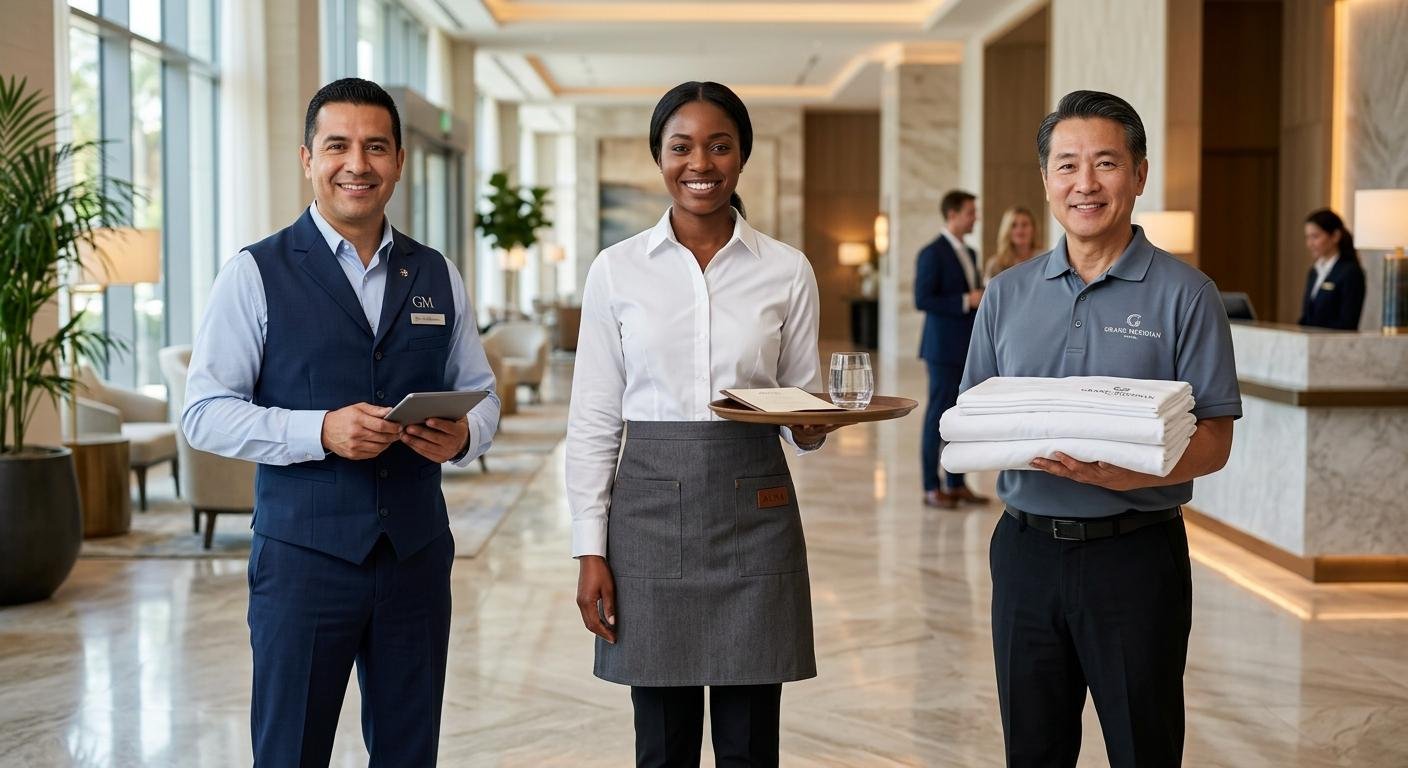
Hospitality uniforms need to remain clean and presentable throughout demanding daily operations. Employees working in hotels, restaurants, cafés, catering services, and other hospitality environments can regularly encounter food, beverages, oils, and other substances that may leave stains on clothing.
Soil release fabrics are designed to help make certain stains easier to remove during laundering. For hospitality businesses, choosing this type of fabric can be an important consideration when balancing uniform appearance, maintenance requirements, durability, and long term costs.
Why Soil Release Fabrics Matter in Hospitality
Hospitality employees often work in environments where clothing can become soiled during normal duties. Restaurant servers may handle food and drinks, kitchen employees can encounter cooking ingredients, and housekeeping teams may work with cleaning products.
When stains become difficult to remove, uniforms may require additional cleaning or replacement. Soil release fabrics can help improve the laundering process by making certain types of soil easier to remove under appropriate washing conditions.
How Soil Release Fabrics Can Help Control Costs
The initial price of a fabric is only one part of the overall uniform cost. Businesses should also consider cleaning, maintenance, replacement frequency, and expected garment lifespan.
If uniforms remain presentable for longer and can be effectively cleaned through normal laundering procedures, businesses may be able to reduce unnecessary replacement. This does not mean that soil release fabric eliminates stains or guarantees permanent stain removal, but it can be a useful feature for frequently washed hospitality garments.
Choosing Fabric for Different Hospitality Roles
Not every hospitality employee has the same uniform requirements. Front office employees may need fabrics that maintain a polished appearance, while food and beverage teams may benefit more from materials designed with regular stain exposure in mind.
Housekeeping employees also require practical uniforms that can handle frequent washing. Choosing fabric according to the employee's daily responsibilities can help businesses avoid paying for features that are unnecessary for certain roles.
For broader hospitality requirements, hotel uniform solutions can be considered when planning uniforms for different departments.
Maintenance and Washing Requirements
Soil release performance does not remove the need for proper garment care. Hospitality businesses should follow the manufacturer's washing instructions to maintain fabric performance and garment quality.
Incorrect washing temperatures, unsuitable detergents, excessive heat, or improper drying methods can affect the appearance and useful life of uniforms. Establishing consistent laundry procedures can therefore help protect the investment made in hospitality workwear.
Soil Release Fabrics and Employee Appearance
Clean and professional uniforms contribute to a consistent hospitality environment. Employees who interact directly with guests need clothing that maintains a neat appearance throughout their working schedule.
Using fabrics that are easier to maintain can support this objective, particularly in departments where employees have regular contact with food and beverages. Fabric selection should still be combined with appropriate garment design, sizing, and regular laundering.
Balancing Fabric Features With Budget
Businesses should not automatically choose the most advanced fabric for every uniform. The right decision depends on how frequently garments are exposed to stains, how often they are washed, and how important easy maintenance is for the specific role.
A practical approach is to compare the initial fabric cost with expected maintenance and replacement requirements. A fabric that costs slightly more initially may provide better overall value if it performs well under the intended working conditions.
Branding and Uniform Customization
Hospitality businesses often add embroidered logos, company colors, employee names, or other branding elements to their uniforms. These details should be considered alongside fabric selection during the design stage.
Customization can increase the overall cost, so businesses should establish branding requirements before production. Consistent specifications can also make future replacement orders easier to manage.
Where Soil Release Fabrics Can Be Most Useful
Soil release fabrics can be particularly useful for food and beverage teams, restaurant servers, catering employees, and other hospitality roles where garments are exposed to everyday spills and stains.
Businesses should assess each department individually rather than assuming the same fabric is necessary for every employee. This can help control costs while ensuring each team receives clothing suited to its working conditions.
For restaurant and food service teams, restaurant uniform options can support planning for different employee roles and garment requirements.
Planning a Cost Effective Hospitality Uniform Program
Before ordering uniforms, businesses should consider employee responsibilities, fabric performance, laundering requirements, quantity, branding, expected lifespan, and replacement needs.
Working with UC Uniform can help businesses organize these requirements and select uniform specifications according to their operational needs and budget.
Final Thoughts
Soil release fabrics can provide a practical option for hospitality businesses that need uniforms to remain clean and presentable through frequent use and laundering. Their value should be considered in relation to the complete cost of ownership rather than only the initial fabric price.
By selecting fabrics according to each department's requirements and maintaining them correctly, hotels, restaurants, cafés, and other hospitality businesses can work toward better uniform durability, easier maintenance, and more controlled long term clothing costs.

 English
 Arabic
 French
 Spanish
 Portuguese
 Deutsch
 Turkish
 Dutch
Dutch
 Italiano
 Romaian
 Portuguese (Brazil)
 Greek
Greek