


10 Most Reliable Mercedes-Benz Engines Ever Made (And 10 You Should Avoid)
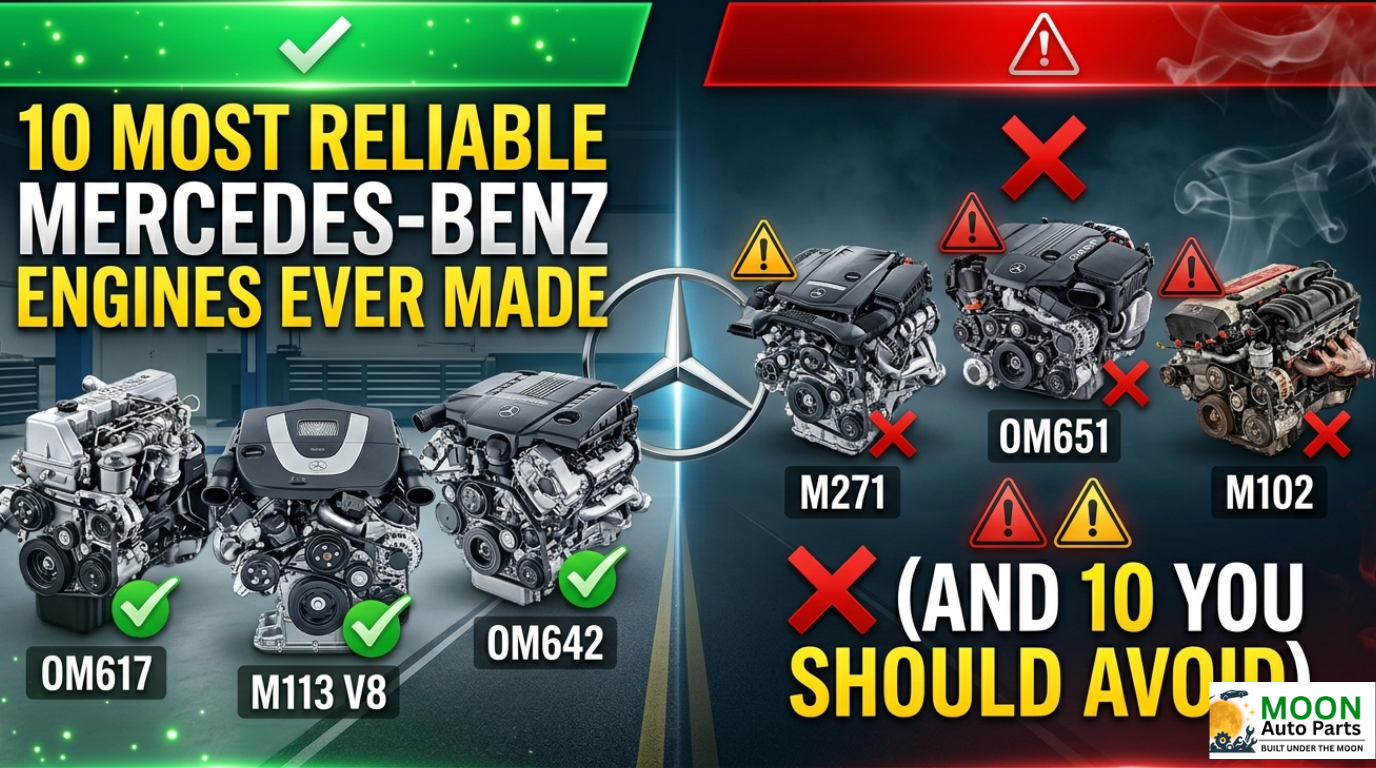
Mercedes-Benz has built a legendary reputation over more than a century of automotive engineering. From luxury sedans to performance coupes and heavy-duty SUVs, the brand has produced some of the most celebrated powerplants in automotive history. However, not every engine that has rolled out of Stuttgart deserves applause. Some Mercedes-Benz Engines have earned near-mythical status for their durability and longevity, while others have become cautionary tales of expensive repair bills and chronic reliability problems.
Whether you're shopping for a used Mercedes-Benz or simply want to understand what's under the hood of your current vehicle, this guide breaks down the 10 most reliable engines the brand has ever produced and 10 that are best avoided.
The 10 Most Reliable Mercedes-Benz Engines Ever Made
1. M102 (1980–1993) – The Bulletproof Four-Cylinder
The M102 is a 2.0 to 2.3-liter inline-four engine that powered many of Mercedes-Benz's compact and mid-size vehicles throughout the 1980s. Known for its cast-iron block and straightforward design, this engine was virtually indestructible with basic maintenance. Many examples have surpassed 300,000 miles without a rebuild, making it one of the most dependable motors the brand has ever produced.
2. OM617 (1974–1991) – The Diesel Legend
If there's one engine that defines Mercedes-Benz reliability, it's the OM617. This 3.0-liter inline-five diesel engine is renowned for running well beyond 500,000 miles when properly maintained. It powered everything from the 240D to the 300SD and has developed a cult following among diesel enthusiasts worldwide. Simple, robust, and forgiving — the OM617 remains a benchmark for diesel longevity.
3. M103 (1984–1993) – The Silky Smooth Six
The M103 inline-six engine was a natural evolution of Mercedes-Benz's commitment to refinement and durability. Displacing between 2.6 and 3.0 liters, this engine offered a perfect balance of smooth power delivery and long-term reliability. It was relatively easy to maintain and rarely caused major mechanical problems, earning a devoted following among classic Mercedes-Benz owners.
4. M119 (1989–1999) – The Sophisticated V8
The M119 was Mercedes-Benz's flagship V8 engine of the late 1980s and 1990s, found in the legendary 500E and SL500. With its dual overhead camshaft design and aluminum construction, it was advanced for its time yet surprisingly reliable. When properly maintained with quality oil and regular servicing, the M119 has proven remarkably long-lived.
5. OM606 (1993–1999) – The Modern Diesel Masterpiece
The OM606 3.0-liter inline-six diesel engine is widely considered one of the greatest diesel engines ever built. Found in the W210 E-Class and various other models, it offers exceptional power, remarkable fuel efficiency, and outstanding durability. Pre-electronic models are especially prized by enthusiasts who want a diesel that can run almost indefinitely with minimal intervention.
6. M111 (1992–2003) – The Dependable Four-Cylinder
The M111 was a significant step forward for Mercedes-Benz's four-cylinder lineup. With a chain-driven camshaft and solid internal engineering, this 2.0 to 2.3-liter engine proved far more reliable than many of its contemporaries. It powered the C-Class, E-Class, and SLK throughout the 1990s and became known for its long service life and minimal maintenance demands.
7. M113 (1997–2011) – The Versatile V8
The M113 was one of the most widely used V8 engines in Mercedes-Benz history, appearing in everything from the E500 to the G500 and ML500. Its single overhead camshaft design kept mechanical complexity manageable, and the engine responded well to high mileage when regular oil changes were observed. Many M113-powered vehicles have exceeded 250,000 miles without engine failure.
8. OM651 (2008–Present) – The Modern Four-Cylinder Diesel
The OM651 brought modern diesel technology into a remarkably compact and efficient package. Used across a wide range of C-Class, E-Class, and GLK models, this engine offered excellent fuel economy combined with solid long-term reliability — provided the diesel particulate filter (DPF) was properly maintained. For diesel buyers looking at newer models, the OM651 is among the safest choices.
9. M156 (2006–2015) – The AMG Screamer
The M156 6.2-liter naturally aspirated V8 found in AMG models is one of the greatest performance engines Mercedes-Benz has ever built. While it requires meticulous maintenance, owners who follow the service schedule are rewarded with an engine that can last well over 150,000 miles while delivering spine-tingling performance. Its lack of turbocharging also means fewer failure-prone components.
10. M270/M274 (2011–Present) – The Efficient Turbocharged Four
The M270 and M274 turbocharged four-cylinder engines represent Mercedes-Benz's modern approach to downsized efficiency. Found in the A-Class, C-Class, and GLA, these engines deliver impressive power from a small displacement. When maintained on schedule with quality synthetic oil, they have proven to be reliable and long-lasting representatives of the modern Mercedes-Benz Engines lineup.
The 10 Mercedes-Benz Engines You Should Avoid
1. M275 (2002–2013) – The V12 Money Pit
The M275 twin-turbocharged V12 sounds spectacular on paper — and in reality. But owning one long-term is a financial nightmare. The timing chain system is notoriously problematic, and repairs on this engine require extensive disassembly that translates into enormous labor costs. Beautiful on a test drive, brutal on a bank account.
2. OM642 (2005–Present) – The Diesel That Swirls Trouble
The OM642 3.0-liter V6 diesel is found in hundreds of thousands of Mercedes-Benz vehicles worldwide. Unfortunately, it has developed a well-documented reputation for swirl flap failures, injector problems, and EGR valve issues. These failures often lead to catastrophic engine damage if not caught early, making this one of the most risky diesel engines in the modern lineup.
3. M272 (2004–2011) – The Balance Shaft Nightmare
The M272 V6 engine looks impressive on paper but hides a serious design flaw — a poorly designed balance shaft gear that wears out prematurely. When it fails, the consequences can be catastrophic. Mercedes-Benz issued a partial fix, but many engines produced before a certain build date remain at risk. Buyers should always verify the build date before purchasing a vehicle with this engine.
4. M273 (2005–2013) – The V8 With the Same Problem
The M273 V8 shares the same balance shaft gear defect as its M272 sibling. While it's a smoother and more powerful engine overall, the balance shaft failure risk makes it a costly gamble for used car buyers. Pre-purchase inspection is absolutely essential with this unit.
5. M278 (2010–2017) – The Turbocharged V8 With Timing Issues
The M278 biturbo V8 offered Mercedes-Benz buyers exceptional performance but came with a significant reliability caveat — a complex timing chain system that is prone to wear and costly to replace. Many owners have faced five-figure repair bills for timing chain replacement, making this engine a financial risk in high-mileage used vehicles.
6. OM648 (2000–2006) – The Injection Nightmare
The OM648 inline-six diesel was technically advanced for its time but earned a poor reputation due to injector failures and high-pressure fuel pump issues. Replacement parts are expensive, and the complexity of the injection system makes diagnosis and repair a time-consuming and costly affair.
7. M112 (1997–2005) – The Leaky V6
The M112 V6 engine is not a disaster by any means, but it earned its spot on this list due to persistent coolant leak issues. The plastic coolant crossover pipes and thermostat housing are notoriously prone to cracking, leading to overheating if ignored. Owners need to be proactive about inspecting and replacing these components.
8. M156 Early Production Issues – The AMG Exception
While the M156 appeared on our reliable list, early production models (2006–2008) suffered from camshaft adjuster failures that led to complete engine seizure in some cases. If you're buying a used AMG with this engine, always verify the production date and service history carefully.
9. OM629 (2005–2012) – The Complex V8 Diesel
The OM629 V8 diesel was used in the GL-Class and S-Class and offered impressive torque and refinement. However, its extreme complexity and expensive injection system components made repairs prohibitively costly. Any significant failure on this engine often leads owners to consider scrapping the vehicle rather than paying for repairs.
10. M157 (2010–2017) – The High-Performance High-Risk
The M157 5.5-liter biturbo V8 AMG engine delivered breathtaking performance but was let down by known issues with its valve train, coolant pipes, and turbocharger seals. In high-mileage examples, these problems compound quickly and expensively, making ownership of the M157 a high-stakes proposition for used car buyers.
Frequently Asked Questions (FAQs)
Q1. Which Mercedes-Benz engine is the most reliable of all time?
The OM617 diesel engine is widely regarded as the most reliable Mercedes-Benz engine ever produced. This 3.0-liter inline-five diesel is famous for surpassing 500,000 miles with proper maintenance. Its simple mechanical design, robust construction, and forgiving nature make it the gold standard of Mercedes-Benz engineering. Many OM617-powered vehicles from the 1970s and 1980s are still running strong on the road today.
Q2. Are high-mileage Mercedes-Benz engines worth buying?
It depends entirely on which engine you're considering and how well it was maintained. Reliable engines like the M113 V8 or the OM606 diesel can still deliver excellent performance at 150,000 miles or more, provided they have a documented service history. However, problem-prone engines like the M272 or OM642 become increasingly risky as mileage climbs. Always request a full service history and have a qualified mechanic inspect any high-mileage engine before purchasing.
Q3. What are the most common problems with Mercedes-Benz engines?
The most frequently reported issues across various Mercedes-Benz engines include timing chain wear, balance shaft gear failures, coolant system leaks, EGR valve problems, and injector failures in diesel models. Many of these problems are model-specific and can be avoided entirely by choosing a well-regarded engine and following the manufacturer's recommended service intervals. Regular oil changes with the correct specification oil are the single most important factor in preventing premature engine wear.
Q4. How long do Mercedes-Benz engines typically last?
A well-maintained Mercedes-Benz engine can last anywhere from 200,000 to 300,000 miles or more. Diesel engines from older model generations are particularly known for exceptional longevity, with some exceeding 500,000 miles. The key factors that determine engine lifespan are the quality and frequency of oil changes, cooling system maintenance, timely timing chain or belt replacement, and avoiding prolonged high-RPM driving before the engine has fully warmed up.
Q5. Is it worth replacing a failed Mercedes-Benz engine instead of buying a new car?
In most cases, yes especially if the rest of the vehicle is in good condition. A quality used Mercedes-Benz engine can cost significantly less than a new vehicle purchase or even a hefty repair bill at a dealership. If the body, transmission, and interior are solid, replacing a failed engine is often the most cost-effective decision. Buying from a trusted supplier that offers tested engines with warranty coverage makes the replacement process straightforward and financially sensible.
Conclusion
Understanding the strengths and weaknesses of Mercedes-Benz Engines is essential knowledge for any prospective buyer or current owner. The best engines in the brand's history share common traits — mechanical simplicity, robust construction, and forgiving maintenance tolerance. The worst ones are typically characterized by overly complex systems, known design flaws, and repair costs that can dwarf the value of the vehicle itself.
If you already own a Mercedes-Benz with one of the less reliable engines on this list, the good news is that replacement options are available. Moon Auto Parts offers a wide selection of quality-tested Mercedes-Benz Engines sourced from low-mileage donor vehicles and backed by solid warranty coverage. Whether you're dealing with a failed M272 balance shaft or a worn-out OM642, Moon Auto Parts provides affordable, dependable replacement engines that can breathe new life into your vehicle without the dealership price tag.
Read also: What Problems Should You Avoid With a Used Chrysler Engine?
Categories
- Lifestyle
- Motivation
- News & Trends
- AI
- Gadgets & Reviews
- Tech News
- Marketing
- Education
- Health & Fitness
- Travel
- Food & Cooking
- Entertainment
- Home & Living
- Sports
- Art
- Causes
- Crafts
- Dance
- Drinks
- Film
- Fitness
- Food
- Games
- Gardening
- Health
- Home
- Literature
- Music
- Networking
- Other
- Party
- Religion
- Shopping
- Sports
Read More
Today's educational environment is digital institutions are in need of smart as well as efficient strategies to oversee their everyday operations. An efficient School Management System plays a essential role in coordinating academic, administrative, as well as financial activities. GeniusEdusoft delivers advanced solutions to make complex school processes easier and improve overall efficiency....

People always assume boxing is simple. Throw punches. Sweat a bit. Boom, you’re a fighter. But the truth? The gear you use decides half your progress before you ever step into a gym. Especially when we’re talking about the different types of boxing bags. And the best boxing equipment in general. I’ve seen folks hit the wrong bag and jack up their wrists for a month. Seen...

In today’s rapidly evolving technological landscape, embedded hardware solutions play a critical role in powering everything from smart homes and wearable devices to industrial automation and advanced medical equipment. Businesses seeking to stay competitive must invest in reliable, efficient, and scalable embedded systems that not only meet current demands but also adapt to future...

Nowadays farming operations are not limited to traditional practices. Due to increasing labor costs, there is a need for farmers to shift towards modern machinery to achieve higher productivity. One such tool that has emerged is the 7 HP power weeder, which acts as a practical solution and has become an important part of modern farming. The machine is a power-packed solution for removing...
Your Ultimate Guide to Easily Passing the CRT-450 A significant step is passing a test. It improves your quality of life. You land a new position. You make more money. You are really pleased with your job. However, you need to properly study CRT-450. Many people put a lot of effort into their studies. They read large volumes. They become really exhausted. That is not required of you. A better...